

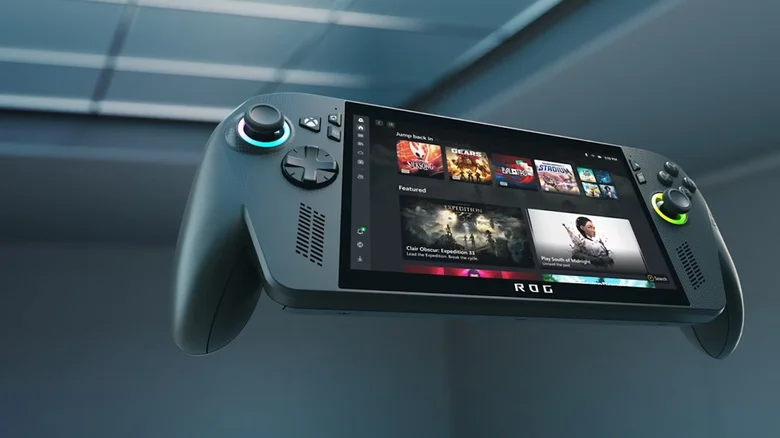
The handheld gaming market has exploded into a fiercely competitive arena since Nintendo’s groundbreaking Switch redefined portable entertainment. Major players like Sony, Valve, Lenovo, MSI, and Asus have all entered the fray, each pushing innovative hardware designed to capture gamers’ attention during travel, commutes, or casual sessions. Asus’s ROG Xbox Ally X represents a bold collaboration between Republic of Gamers and Microsoft’s Xbox division, blending PC power with console ergonomics. Priced at a premium $999.99 and powered by the formidable AMD Ryzen Z2 Extreme processor, this device promises top-tier performance for demanding titles. However, its steep cost raises legitimate questions about value compared to more affordable alternatives from Nintendo and Valve that deliver impressive experiences at significantly lower price points.
While the ROG Xbox Ally X excels in raw horsepower, capable of running modern AAA games at high settings, its positioning sits awkwardly between portable gaming consoles and full-fledged gaming laptops. For gamers prioritizing portability, battery life, and optimized software experiences over maximum graphical fidelity, more cost-effective options provide better overall value without sacrificing enjoyment.
The ROG Xbox Ally X: Power at a Premium
Asus crafted the ROG Xbox Ally X with Xbox’s console expertise, resulting in intuitive controls, a vibrant display, and seamless integration with Microsoft’s gaming ecosystem. The AMD Ryzen Z2 Extreme chipset delivers exceptional frame rates in titles like Cyberpunk 2077 and Starfield, often surpassing competitors in benchmark tests. Variable refresh rate screens, ergonomic grips, and customizable RGB lighting appeal to enthusiasts seeking a premium handheld that doubles as a showcase piece.
However, this power demands compromises. Battery life averages 1.5-2 hours during intensive gaming sessions, requiring frequent charging or tethering to power sources. Windows 11, while versatile for desktop applications, proves clunky on small screens with controller navigation. Frequent driver updates and thermal throttling under prolonged loads further complicate the experience. At nearly $1,000, the device targets hardcore PC gamers willing to pay for cutting-edge specs, but casual players find limited justification for the investment.
Nintendo Switch 2: Optimized Portable Perfection
Nintendo’s Switch 2 offers unmatched value at $550, prioritizing seamless gameplay over raw power. The hybrid design supports handheld, tabletop, and docked TV modes with Joy-Con controllers that enable instant multiplayer sessions. Nintendo’s custom NVIDIA processor delivers smooth 1080p handheld performance and 4K docked output, perfectly suited for its exclusive library of polished first-party titles like Zelda, Mario, and Animal Crossing.
Battery life extends 6-9 hours, enabling full gaming sessions without recharging concerns. The intuitive interface requires zero tinkering — games launch instantly with consistent frame rates thanks to Nintendo’s meticulous optimization. While graphical fidelity trails PC handhelds, the Switch 2’s massive exclusive library, family-friendly appeal, and legendary portability create an ecosystem that PC alternatives struggle to match. For travelers and casual gamers, the $450 price difference translates to superior everyday usability rather than benchmark superiority.
Steam Deck OLED: PC Gaming Value Champion
Valve’s Steam Deck OLED redefines PC handheld value at $549, delivering robust performance through SteamOS — a Linux-based interface purpose-built for controller navigation. The 7.4-inch HDR OLED display produces stunning visuals with deep blacks and vibrant colors, rivaling premium handhelds twice the price. Custom AMD APU architecture runs thousands of Steam titles at 720p-1080p with 30-60 FPS, including demanding games like Elden Ring and Baldur’s Gate 3 through Proton compatibility layers.
Battery life reaches 3-8 hours depending on workload, doubling the ROG Ally X’s endurance. Trackpad controls enable precise desktop navigation, while suspend/resume functionality maintains progress across sessions. At half the ROG’s cost, the Steam Deck accesses PC gaming’s vast library without Windows bloat. Regular firmware updates enhance compatibility and performance, ensuring longevity. For PC gamers seeking library access and solid performance without extravagant pricing, the Deck represents unbeatable value.
Performance vs. Practicality: Making the Right Choice
Direct comparisons reveal clear trade-offs. The ROG Xbox Ally X dominates synthetic benchmarks but sacrifices portability and ease-of-use. Switch 2 prioritizes frictionless gaming across scenarios, leveraging Nintendo’s software mastery. Steam Deck balances PC versatility with console simplicity at budget pricing. Gamers must define priorities: maximum graphical settings justify the Ally X’s premium, while optimized experiences favor alternatives.
Battery life proves decisive for travel. Switch 2 and Steam Deck enable multi-hour sessions; ROG requires planning around outlets. Software ecosystems matter too — Xbox Game Pass shines on Ally X, Nintendo exclusives define Switch 2, Steam’s library powers Deck. Each excels within its niche rather than universal supremacy.
Future-Proofing Your Handheld Investment
Handheld evolution accelerates rapidly. ROG Ally X’s upgradeable components offer longevity, but high cost accelerates ROI pressure. Switch 2’s closed ecosystem ensures consistent performance through Nintendo’s development cycle. Steam Deck benefits from Valve’s ongoing SteamOS improvements and hardware refreshes.
Consider usage patterns when investing. Frequent travelers prioritize battery and simplicity (Switch 2/Deck). Homebody PC gamers chasing 120FPS ultra settings lean ROG. Budget-conscious players find Deck’s value proposition irresistible. Each device represents excellence within defined parameters rather than outright market domination.
The ROG Xbox Ally X delivers spectacular performance for enthusiasts undeterred by its premium positioning. However, Nintendo Switch 2 and Steam Deck OLED provide superior value for most gamers, balancing cost, battery life, and usability more effectively. Handheld gaming thrives through diverse options catering to varied preferences rather than singular supremacy. Your ideal device hinges on gaming habits, budget tolerance, and ecosystem loyalty — not benchmark charts alone.