

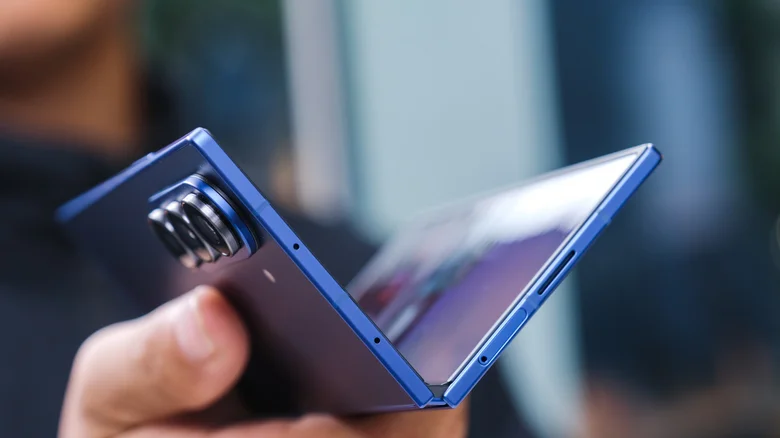
Apple is widely expected to finally enter the foldable market next year with a book‑style iPhone Fold positioned at the very top of the iPhone 18 family. Instead of launching four standard slab models at once, Apple is rumored to focus first on iPhone 18 Pro, iPhone 18 Pro Max, and the new foldable, while the base iPhone 18 slips to spring 2027. This staggered launch would let Apple spotlight its most advanced hardware and give the foldable room to define a new category, rather than being relegated to a side experiment.
Apple’s Different Take On Foldable Design
Most current book‑style foldables, including Samsung’s Galaxy Z Fold 7, are tall and narrow when closed, which can make them feel like remote controls and cramped for one‑handed use. Apple is rumored to be going in the opposite direction by making the iPhone Fold wider and shorter when folded, closer to a compact iPad mini in feel when opened and more like a regular iPhone in width when closed. That wider aspect ratio should produce a more natural “tablet” experience when the device is unfolded, with less letterboxing and more comfortable multitasking than the ultra‑tall, thin canvas of many existing Fold devices.
A major technical focus is reportedly the inner display crease. Many current foldables show a visible and tactile groove down the center, which can be distracting when watching video or drawing. Apple is said to have either dramatically reduced or effectively eliminated this crease through hinge redesign and refined panel layering, bringing the experience closer to a seamless iPad‑style screen. Even if a faint crease remains, the goal is clearly to make it far less noticeable in daily use, especially in bright light and off‑axis viewing.
Learning From Oppo, Huawei, And Others
Apple would not be the first to challenge Samsung’s tall‑fold design. Devices like Oppo’s Find N and Huawei’s Pura X have already experimented with wider, squarer book‑style formats that feel more balanced in the hand. These phones demonstrate that a shorter, wider chassis can deliver a superior inner-tablet experience and a more familiar outer display for everyday tasks like messaging and browsing. Apple’s rumored design direction appears much closer to these devices than to Samsung’s long, skinny Z Fold lineage.
What Apple brings, however, is a mature tablet ecosystem. If the iPhone Fold unfolds into something approximating an 8‑inch iPad‑mini‑like display, Apple can immediately tap into years of iPadOS‑optimized apps, split‑screen multitasking, Pencil‑style input concepts, and advanced media workflows. Even if the company keeps the software branded as iOS 26 on the iPhone Fold, it can still lift proven tablet layouts and behaviors from iPadOS 26 to give its first‑gen foldable an unusually polished “big screen” experience right out of the gate.
Samsung’s Response: A New Fold Concept
Meanwhile, Samsung appears to be quietly prototyping a new foldable form factor that abandons the ultra‑tall Z Fold silhouette in favor of something squarer and more tablet‑like. Internal surveys and concept images point to a device that is wider and shorter than current Galaxy Z Fold models when closed, then opens into a display that more closely resembles a small tablet rather than an elongated rectangle. This would mirror the rumored proportions of Apple’s iPhone Fold and the path charted by Oppo and Huawei.
Reports suggest Samsung is targeting 2026 for this new device, potentially as a “Fan Edition” or streamlined companion to the Galaxy Z Fold 8. Launching such a product before Apple’s foldable fully saturates the premium market would allow Samsung to claim it anticipated the wider, more tablet‑centric trend—even if Apple’s own design cues and panel orders helped inspire the move. The result could be a lineup where Samsung offers both the classic, tall Z Fold style and a more Apple‑like short‑wide foldable, giving buyers a choice of ergonomics.
Recent Samsung Moves That Set The Stage
Samsung has already shown a willingness to experiment beyond its standard Fold/Flip template:
– The Galaxy Z TriFold introduces a triple‑panel fold that collapses into a phone‑sized device and unfolds into a roughly 10‑inch tablet, complete with custom large‑screen interfaces.
– The ultra‑thin Galaxy S25 Edge attempted to preempt Apple’s ultra‑slim iPhone Air with an aggressively thin design, though weak sales reportedly led to the Galaxy S26 Edge being canceled.
– Rumors indicate the Galaxy S26 may be deliberately “downgraded” in some areas to maintain a competitive $799 price against Apple’s standard iPhone 17, highlighting how tightly Samsung watches Apple’s pricing and feature moves.
On top of that, Samsung Display is believed to be the primary or sole supplier of foldable panels for Apple’s first iPhone Fold. That supply relationship inevitably gives Samsung early insight into certain physical constraints and dimensions of Apple’s design, even if it cannot see the complete product or Apple’s secret hinge engineering. Such knowledge can influence Samsung’s own industrial design choices and timing.
A Coming Battle Of Foldable Philosophies
If current timelines hold, 2026 could bring a very direct clash of philosophies. Apple will likely position its iPhone Fold as an iPad‑class productivity and creativity device that just happens to fold into a pocketable iPhone‑like shell, backed by tight integration with iCloud, Apple Pencil concepts, and Apple Intelligence features tuned to large screens. The emphasis will be on polish, reduced crease visibility, premium materials, and deep app ecosystem support that makes the fold feel indispensable instead of gimmicky.
Samsung, for its part, will attempt to leverage its head start in hinge durability, water resistance, and multi‑generation Fold refinements, while diversifying designs to avoid being pigeonholed into one aspect ratio. A new, wider foldable would allow it to offer a more tablet‑like experience to fend off Apple, while the Z TriFold pushes even further into productivity‑first territory. Pricing will be crucial: Samsung has shown it will trim specs to hit key price points, whereas Apple is more likely to keep the iPhone Fold firmly in ultra‑premium territory at launch.
What Users Can Expect From The New Form Factor
For everyday users, a shorter, wider book‑style foldable from both companies would change how these devices feel and function:
– The outer screen will behave more like a normal phone display, improving one‑handed typing and app layouts.
– The inner screen will feel closer to an 8–10‑inch tablet than to an oversized phone, better for reading, drawing, gaming, and multi‑window layouts.
– Reduced creasing and improved durability should make long sessions of video, note‑taking, or document editing more comfortable.
– Software will increasingly distinguish the devices: Apple leaning on iPadOS‑inspired multitasking and continuity, Samsung on DeX‑style desktop modes, S Pen support, and multi‑panel workflows.
As both brands iterate, the market may finally move beyond the question of “should a phone fold?” to “which style of folding device best suits my work and entertainment?” In that landscape, Apple’s rumored iPhone Fold and Samsung’s new wider concept are less about copycats and more about converging on what users actually want from a pocketable tablet‑phone hybrid: natural proportions, minimal compromises, and software that treats the big screen as a core canvas, not a novelty.