
The Ingress Protection (IP) rating stamped on a smartphone’s spec sheet is more than just marketing jargon; it is a standardized code that defines the device’s resilience against environmental intrusions. Understanding this rating is crucial for informed usage, as it delineates the clear boundaries between incidental protection and guaranteed survivability. An IP rating consists of the letters “IP” followed by two digits: the first signifies solid particle (dust) protection, and the second denotes liquid (water) ingress protection. A common high rating like IP68 indicates a robust, sealed design, but it is not an unconditional warranty for all aquatic adventures. It is essential to recognize that these ratings are based on controlled laboratory tests with fresh water and do not account for real-world variables like saltwater corrosion, chlorine concentration, water pressure from jets, or the inevitable degradation of seals over time. This knowledge empowers users to protect their investment while avoiding costly misunderstandings about what their phone can genuinely withstand.
What Do IP Ratings Mean?
The IP standard is governed by the International Electrotechnical Commission (IEC), providing a consistent benchmark across manufacturers. The first digit, ranging from 0 to 6, specifies protection against solids. A rating of 6, as seen in IP68, represents the highest level, meaning the device is “dust-tight” and prevents any ingress of fine particulates. A rating of 5 indicates “dust protected,” where some dust may enter but not in sufficient quantity to interfere with operation. Lower numbers (1-4) only guard against larger objects like tools or wires. An ‘X’ in this position means the device has not been rated for dust protection, a designation sometimes found on early foldable phones due to their complex hinge mechanisms. The second digit, concerning liquid protection, ranges from 0 to 9. An 8 signifies the device can withstand continuous immersion in water deeper than 1 meter for a duration specified by the manufacturer (typically 30 minutes). A 7 indicates protection against immersion in up to 1 meter of water for 30 minutes. Ratings of 5 and 6 defend against water jets and powerful splashes but not submersion. Lower numbers offer only minimal protection against dripping water. This two-digit system provides a precise, if technical, snapshot of a device’s defensive capabilities.
The Highest Ratings
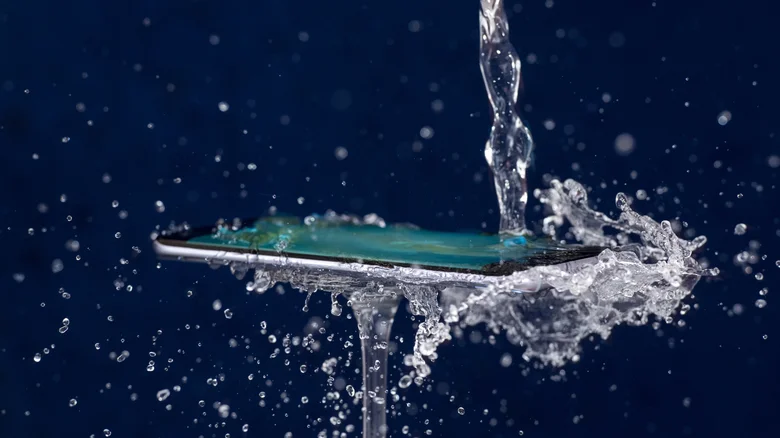
Beyond the common IP68, a newer, more rigorous standard is emerging in the smartphone market: IP69 and IP69K. These ratings combine the dust-tightness of a ‘6’ with an extreme liquid protection level denoted by ‘9’. An IP69-rated device is tested to withstand high-pressure, high-temperature water jets from close range, simulating conditions for cleaning in industrial or food-processing environments. Demonstrations often show phones surviving a cycle in a dishwasher’s top rack. The IP69K rating adds an even stricter industrial specification, requiring resistance to jets of water at pressures up to 1,450 psi and temperatures nearing 80°C (176°F). While this extreme endurance is overkill for everyday scenarios like dropping a phone in a pool or getting caught in the rain, it offers ultimate peace of mind against accidental spills, powerful water guns, or other high-pressure liquid exposures. For the vast majority of users, a rating of IP68 remains more than sufficient, providing excellent protection against dust and casual water exposure. However, for those with particularly active lifestyles or who work in harsh environments, seeking out a device with an IP69 rating represents the current pinnacle of durable smartphone engineering.