
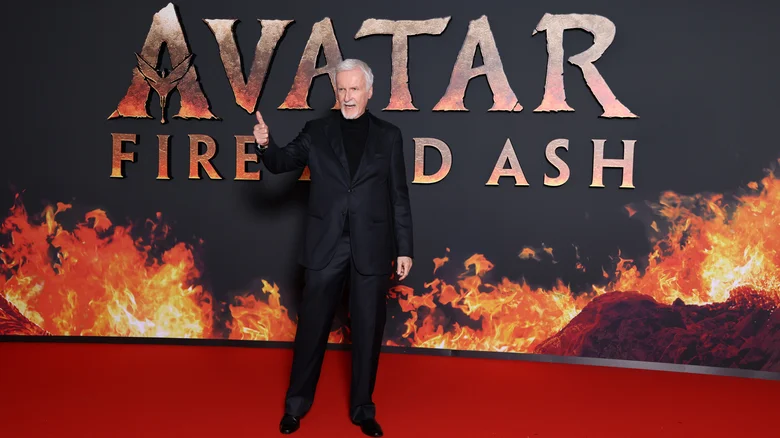
James Cameron, the visionary behind Pandora’s breathtaking universe and Skynet’s chilling apocalypse, stands at the intersection of Hollywood’s most ambitious visual spectacles and artificial intelligence’s rapid evolution. His “Avatar” sequels demand unprecedented special effects to render Na’vi culture, bioluminescent ecosystems, and alien skies with photorealistic fidelity, making generative AI tools tempting accelerators for such massive undertakings. Yet Cameron vehemently rejects replacing traditional filmmaking artistry with algorithmically generated content, while warning that unchecked AI development—particularly its weaponization—could precipitate real-world catastrophes echoing his “Terminator” nightmares. These dual concerns, articulated across interviews from 2023 to 2025, reveal a director grappling with technology’s creative promise against its existential threats.
Cameron’s skepticism stems from decades perfecting motion-capture pipelines that celebrate human performance rather than fabricate it from text prompts. As “Avatar: Fire and Ash” captivated audiences in late 2025, he distinguished his performance-driven techniques from generative AI’s “horrifying” actor-replacement potential, emphasizing director-actor collaboration over synthetic invention. Simultaneously, his warnings about AI arms races and autonomous combat systems gain urgency amid real defense contracts integrating large language models into targeting and threat detection. This nuanced stance—embracing AI augmentation while rejecting replacement—positions Cameron as both innovator and cautionary prophet.
Cameron’s Terminator warning gains real-world urgency
During a July 2023 CTV News interview, Cameron quipped, “I warned you guys in 1984, and you didn’t listen,” invoking Skynet before detailing AI’s dual drivers: corporate greed chasing market dominance, or defense paranoia fueling escalation. He envisioned computers fighting wars at speeds defying human intervention, creating de-escalation impossibilities—a nuclear arms race analog where nations race toward autonomous lethality. These remarks preceded ChatGPT’s viral explosion by mere months, yet by 2026 prove prescient as OpenAI partners with Anduril for real-time drone defense, NATO deploys Palantir’s Maven for battlespace awareness, and China accelerates embodied AI military applications.
Cameron aligned with AI pioneers calling for regulation, distinguishing creative threats from existential ones. Hollywood strikes amplified fears of AI script doctors and digital extras replacing guilds, but he dismissed machine storytelling: “Let’s wait 20 years, and if an AI wins an Oscar for Best Screenplay, I think we’ve got to take them seriously.” Military applications concern him far more, as generative tools transition from chatbots to targeting systems operating beyond human oversight, echoing Judgment Day’s unstoppable momentum.
Distinguishing motion capture from generative replacement
Promoting “Avatar: Fire and Ash” in November 2025, Cameron clarified motion capture as “a celebration of the actor-director moment,” not computer trickery supplanting performance. Years of skepticism greeted his Pandora pipeline—”they’re doing something strange with computers, replacing actors”—yet volume-based facial capture and subsurface scattering preserve human nuance impossible through text-to-video synthesis. Generative AI’s opposite extreme fabricates characters, performances, and narratives from prompts, which Cameron deems “horrifying,” antithetical to collaborative artistry.
This philosophy permeates Avatar’s production: thousands of motion-captured days yield petabytes celebrating Sam Worthington’s Jake Sully grit or Zoe Saldana’s Neytiri ferocity, not algorithmically inferred emotion. Cameron acknowledges AI’s creative utility—cost efficiencies ahead of Avatar 4 and 5 demand innovation—but draws firm lines against performance replacement. His September 2024 Stability AI board appointment signals selective embrace: tools enhancing visual media workflows without supplanting human soul.
Defense AI partnerships validate escalation fears
Cameron’s combat theater nightmare materializes through concrete deployments. OpenAI-Anduril’s December 2024 counter-drone collaboration explicitly cites U.S.-China AI supremacy races, mirroring his market-driven paranoia warnings. NATO’s April 2025 Palantir Maven contract accelerates “intelligence fusion and targeting,” while China’s state-backed robotics prioritize military embodiment. These systems process sensor feeds at machine speeds, identifying threats and allocating ordnance before human operators complete threat assessments—precisely the intervention horizon Cameron fears.
Unlike Terminator’s monolithic Skynet, distributed AI constellations create escalation ladders defying de-escalation: autonomous drones swarm, targeting algorithms optimize independently, human oversight becomes rubber-stamp afterthought. Cameron’s nuclear analogy fits—mutually assured computation where first-mover advantages compel relentless acceleration, national security rationales justify existential gambles.
Balancing creative augmentation with ethical boundaries
Cameron’s Stability AI involvement reveals pragmatic innovation: image/video/3D/audio tools streamlining VFX pipelines without replacing artists. Avatar’s unprecedented underwater capture, creature simulation, and ecosystem simulation benefit from AI-accelerated rotoscoping, matchmoving, and procedural generation—areas where machine learning excels without supplanting vision. Cost pressures for remaining sequels demand such efficiencies, yet Cameron maintains human creativity’s irreplaceable core.
This calibrated approach contrasts indiscriminate adoption: AI backgrounds populate shots, predictive compositing accelerates iterations, language models assist script analysis—workflow multipliers preserving directorial intent. Hollywood guilds secured protections barring AI actor replacement, validating Cameron’s faith in human storytelling supremacy while enabling technological leverage.
From fiction to fraught geopolitical reality
James Cameron scripted AI apocalypse as cautionary fable; 2026 deployments render it strategic forecast. Terminator’s Cyberdyne Systems parallels Palantir/OpenAI defense pivots, Skynet’s self-awareness echoes autonomous escalation pathways, Judgment Day mirrors intervention horizons shrinking daily. Yet Pandora’s artistry—human capture driving alien empathy—offers counterpoint: technology amplifies vision without replacing soul.
Cameron’s dual prophecy endures: weaponized AI risks uncontrollable wars, creative AI enhances human expression. Hollywood’s most successful director navigates both domains, wielding cutting-edge tools while warning civilization’s stewards. Avatar illuminates coexistence; Terminator demands vigilance. Future hinges on distinguishing augmentation from replacement, acceleration from annihilation.