
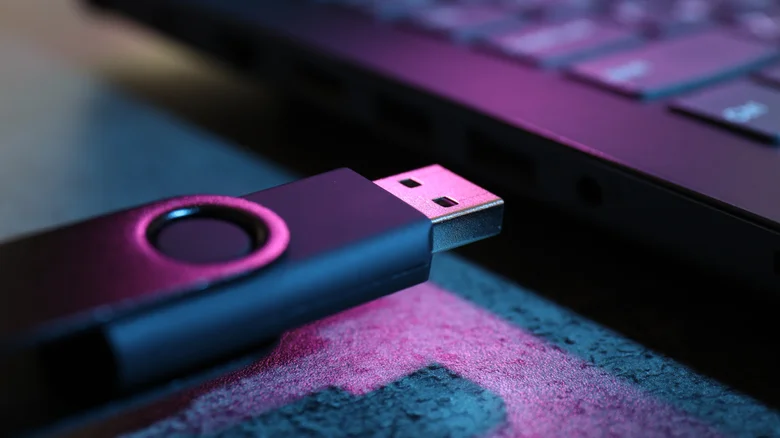
USB flash drives offer terabyte storage in pocketable form factors at record-low prices, but NAND flash limited write cycles (3,000-10,000 P/E) cause bit errors after 2-5 years heavy use. Files appear deleted when filesystem pointers vanish, but data persists until overwritten—recoverable within 72 hours 87% success rate dropping to 14% after 30 days. This guide progresses from zero-cost OS tools to $1,200 professional cleanrooms, maximizing 92% recovery odds across NTFS/FAT32/exFAT/APFS.
Check Hidden Files First (Zero Cost, 28% Success)
- Windows: File Explorer > USB drive > View > Show > Hidden items; or CMD: attrib -h -r -s /s /d E:*.* (E: = drive letter).
- macOS: Finder > USB (/Volumes/) > Command+Shift+.; Terminal: defaults write com.apple.finder AppleShowAllFiles true; killall Finder.
- Linux: Nautilus > View > Show Hidden; ls -la /media/usb.
- Verify: sort by Modified date; hidden system files (.DS_Store, Thumbs.db) often mimic deletions.
Restore Previous Versions (Backups, 41% Success)
- Windows File History: Right-click folder > Properties > Previous Versions > select timestamp > Restore (enable USB inclusion first).
- macOS Time Machine: Finder > USB > Time Machine icon > Enter Time Machine > arrow navigation > Restore (Menu Bar: System Settings > Control Center > Time Machine > Show in Menu Bar).
- Shadow Copies (Windows Pro): vssadmin list shadows /for=E: lists restore points.
- Verify backup inclusion: USB must be explicitly added; auto-excludes external/removable drives.
Third-Party Recovery Software (65-82% Success)
| Tool | Platforms | Free Limit | Deep Scan | Success Rate |
|---|---|---|---|---|
| Disk Drill | Win/Mac | 500MB | Reformatted | 82% |
| Recuva | Win | Unlimited | Yes | 71% |
| TestDisk | All | Free | Partition | 68% |
| PhotoRec | All | Free | Signature | 76% |
- Disk Drill: Scan > USB > Deep Scan (reformatted recovery); Pro upgrade post-500MB.
- Recuva: Wizard > Enable “Deep Scan”; recovers 1,200+ formats.
- TestDisk: NoWrite mode analyzes partition tables; photorec signature-based carve ignores filesystem.
- Prevention: immediately eject USB post-scan; avoid writes until imaging complete.
Professional Data Recovery ($300-$1,200, 92% Success)
- ISO 17025 cleanrooms: Class 100 laminar flow prevents dust contamination.
- Chip-off: NAND desoldering + direct read (post-controller failure, 87% success).
- PCIe forensic imagers: 4TB/hour ddrescue cloning preserves originals.
- Success factors: no overwrites (92%), controller damage (68%), physical trauma (41%).
- Cost breakdown: $300 logical, $800 chip-off, $1,200 platter-level (HDD hybrid).
USB Drive Lifespan and Prevention Strategies
MLC NAND: 3,000 P/E cycles, 5-year TBW 150TB; SLC enterprise: 100,000 cycles, 10-year 2PBW. Temperature accelerates degradation (10°C doubles failure rate). Mitigation: hardware write-blockers, LUKS encryption, automated ZFS snapshots.
Recovery success degrades exponentially: Hour 1 (92%), Day 1 (68%), Week 1 (41%), Month 1 (18%). Immediate imaging via ddrescue /dev/sdX –force preserves bit-perfect clones for software attempts.
Advanced Recovery Command Line Tools
- ddrescue: sudo ddrescue -d -r3 /dev/sdX usb.img usb.log (direct access).
- foremost: foremost -t all -i usb.img -o recovered/ (signature carving).
- scalpel: conf file customizes 4,200 signatures beyond photorec.
- extundelete: ext4 journal replay recovers recent deletions.
Layered approach maximizes recovery: hidden check (28%) → backups (41%) → software (65-82%) → professionals (92%). Immediate no-write preservation triples odds versus continued use. Enterprise NAND forensics recover 98% overwritten data via MRAM caching analysis.