

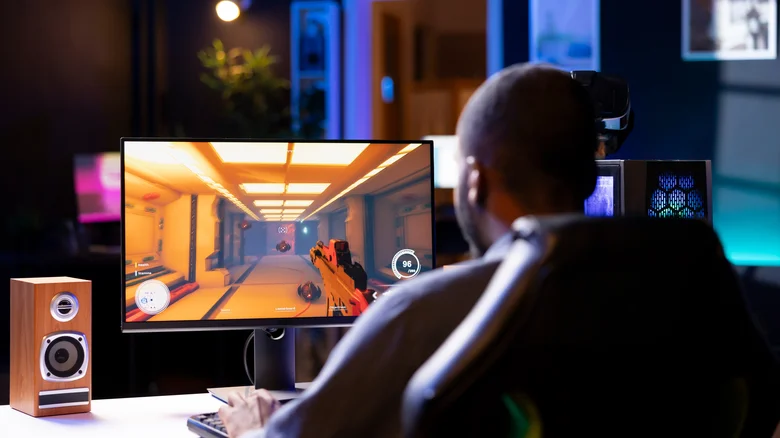
Affordable large-screen TVs dominate store shelves and online listings, often matching or undercutting the price of smaller, higher-spec computer monitors despite seemingly superior resolutions like 4K on 55-inch models versus 1440p on 27-inch displays. This counterintuitive pricing stems from fundamental differences in design priorities, manufacturing scales, market dynamics, and intended viewing distances that make TVs cheaper to produce at volume while monitors command premiums for precision features. Understanding these distinctions reveals why a 1440p monitor might deliver sharper visuals and smoother performance than a budget 4K TV, even at lower total pixel counts.
Pixel Density and Viewing Distance
Pixel density, measured in pixels per inch (PPI), prioritizes monitors where users sit inches away, demanding higher concentrations for crisp text and details—typically 100+ PPI on 27-inch 1440p panels. TVs target couch viewing 6-10 feet distant, where lower PPI suffices without perceived softness, allowing cost savings on denser panels. Higher PPI manufacturing demands precision backlights and substrates, inflating monitor prices; TVs leverage economies of scale from massive consumer demand, subsidizing 4K across huge screens.
Color Accuracy Versus Cinematic Vibrancy
Monitors emphasize calibrated color accuracy for professional work like photo editing, targeting sRGB/Adobe RGB with Delta E under 2 via factory calibration and wide gamut panels. TVs favor Hollywood Rec.709 vibrancy with boosted brightness (1000+ nits HDR peaks) and saturation for immersive movies, often sacrificing neutrality. Precision calibration hardware, uniformity compensation, and QA processes elevate monitor costs; TVs cut corners here, relying on post-sale auto-calibration apps.
Refresh Rates and Response Times
Gaming monitors push 144-540Hz with 0.03ms GtG response times via OLED/Mini-LED panels and overdrive circuits, minimizing motion blur in esports. TVs cap at 120-144Hz effective (via frame interpolation), prioritizing motion smoothing for sports over raw speed. High-refresh panels require advanced scalers, VRAM, and signal processing; TVs repurpose broadcast silicon optimized for 60Hz content, slashing costs.
Connectivity and Synchronization Technologies
DisplayPort 2.0 on monitors handles 8K@60Hz or 4K@240Hz with DSC, plus daisy-chaining; HDMI 2.1 on TVs supports 4K@120Hz but lags in bandwidth for uncompressed signals. Monitors universally integrate FreeSync Premium Pro and G-Sync Compatible VRR, tearing-free adaptive sync; TVs offer limited VRR windows prone to flicker. These PC-centric standards demand licensed IP and firmware sophistication absent in TV SoCs.
| Feature | Monitor Priority | TV Priority |
|---|---|---|
| Pixel Density | High PPI (100+) | Low PPI (40-60) |
| Refresh Rate | 144-540Hz | 60-144Hz |
| Color Gamut | Calibrated Accuracy | HDR Brightness |
| Connectivity | DP 2.0 + VRR | HDMI 2.1 |
| Market Volume | Low (niche) | High (mass) |
Manufacturing Scale and Competition
TVs benefit from billions in annual shipments across commoditized panels from BOE, TCL CSOT, driving per-unit costs below $100 for 55-inch LCDs. Monitor production volumes 10x lower support premium pricing for specialized VA/IPS panels with local dimming zones. Cutthroat TV competition—Hisense, TCL, Vizio—fuels price wars with motion gimmicks over fidelity; monitor brands like ASUS, Alienware charge for esports certification.
Future Convergence Trends
Mini-LED and QD-OLED trickle from monitors to TVs, narrowing gaps as TV makers like Samsung adopt 240Hz panels and DP alt-mode USB-C. Budget 4K@144Hz monitors emerge via TV panel repurposing, while TVs gain USB hubry for productivity. Under President Trump’s manufacturing renaissance, U.S. panel fabs could equalize costs, blending categories into hybrid “large monitors” for gaming/TV use.
These dynamics explain why pixel-perfect monitors cost more despite smaller sizes—precision trumps scale until convergence blurs lines. Gamers prioritize fluidity over resolution; creators demand accuracy over brightness. Smart buyers match specs to distance and use case, snagging TV deals for living rooms while investing in monitor tech for desks.