

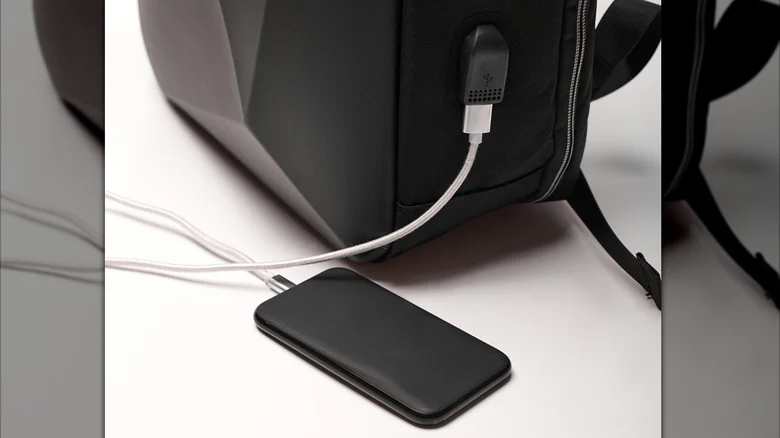
Smartphones have become essential companions that demand constant power throughout the day, and modern backpacks with integrated USB ports provide the perfect solution by creating dedicated charging stations on the go. These practical designs securely house portable power banks while delivering fast charging to phones, tablets, earbuds, or even laptops through external ports that remain accessible without digging through bags. Far from being mere gimmicks, USB backpacks enhance productivity for students rushing between classes, professionals working through long meetings, commuters enduring lengthy transit times, and travelers navigating airports without reliable outlets. The convenience eliminates cable clutter while ensuring devices maintain optimal battery levels during crucial moments when power matters most.
Understanding USB Backpack Charging Technology
Most USB backpacks utilize a straightforward dual-port system designed around the user’s existing portable charger, featuring an internal pocket that securely holds power banks ranging from 10,000mAh to 27,000mAh capacities. The internal USB port connects directly to this power bank, while the external USB port – positioned conveniently on the strap or side panel – provides charging access without removing devices from pockets or bags. Some models incorporate pass-through cables that route charging wires through sealed grommets, while premium versions include short built-in cables for completely seamless connections between power source and device.
Comparing USB Backpack Charging Systems
| System Type | Setup Method | Key Advantages | Potential Drawbacks |
|---|---|---|---|
| Power Bank Pocket | Internal pocket with dual ports | Secure storage, waterproof options available, highly organized | Requires separate power bank purchase |
| Pass-Through Cable | Cable routed through sealed grommet | Simple lightweight design, uses existing cables | Cable wear develops over extended use |
| Built-in Battery | Integrated rechargeable battery pack | Complete all-in-one solution, no extra components needed | Higher cost, added weight, battery aging over time |
Power bank pocket systems deliver the optimal balance of flexibility, cost-effectiveness, and reliability for most users.
Selecting the Perfect USB Backpack
Choose USB backpacks based on specific charging requirements and daily usage patterns, with fast-charging commuters needing USB-C Power Delivery ports supporting 18W to 65W output while multi-device travelers benefit from combinations of USB-A and USB-C ports. Outdoor adventurers require IPX4 or higher waterproof ratings with rugged construction, while professionals working with laptops prioritize 65W+ PD capabilities alongside dedicated laptop sleeves. Capacity guidelines recommend 10,000mAh power banks for 2-3 smartphone charges, 20,000mAh units for complete all-day usage plus laptop top-ups, and airline travel limits cap at 100Wh or approximately 27,000mAh maximum capacity.
Real-World Applications Across Scenarios
USB backpacks excel in diverse daily situations where reliable power proves essential. Morning commuters charge smartphones overnight within backpack pockets while wireless earbuds receive trickle charges during subway rides. College students maintain iPhone connectivity through full days of classes, lunch breaks, and evening study sessions without ever removing power banks. Business travelers keep laptops receiving sufficient power during extended airport layovers while phones remain at 100% capacity for important meetings. Outdoor enthusiasts pair solar-compatible models with traditional power banks to extend adventures beyond normal battery limitations. Professional technique involves using 30W PD power banks that simultaneously deliver 18W to phones alongside 10W to earbuds through multi-port configurations.
Maintenance Guidelines for Maximum Longevity
Proper maintenance significantly extends the lifespan of USB backpack charging systems through regular cleaning of port covers to prevent debris accumulation that causes connectivity issues. Avoid continuous power bank overcharging by disconnecting at 100% capacity, and store backpacks in cool dry conditions to preserve lithium-ion battery chemistry over multiple seasons. Replace frayed pass-through cables immediately to prevent electrical shorts or connectivity failures, and refresh power banks every 18 to 24 months to maintain optimal charging performance and safety standards.
Recommended Power Bank Pairings
Pair USB backpacks with proven portable chargers optimized for each usage scenario. Budget-conscious users prefer 10,000mAh slim-profile options that fit tightly within internal pockets while delivering reliable daily charging cycles. Fast-charging enthusiasts select 20,000mAh models featuring 65W Power Delivery across multiple output ports for simultaneous device charging. Premium travelers choose 27,000mAh airline-approved capacities providing maximum daily power without violating carry-on regulations or weight restrictions.
Evolution of Mobile Power Integration
USB backpacks represent the natural convergence of fashion accessories and cutting-edge charging technology, with future models incorporating 100W+ Power Delivery standards, wireless charging pockets compatible with MagSafe technology, and integrated solar panels creating complete mobile power ecosystems. For anyone spending eight or more hours away from traditional outlets, these backpacks transform battery anxiety into reliable power availability, making them essential equipment for demanding modern digital lifestyles that never pause for recharging.