
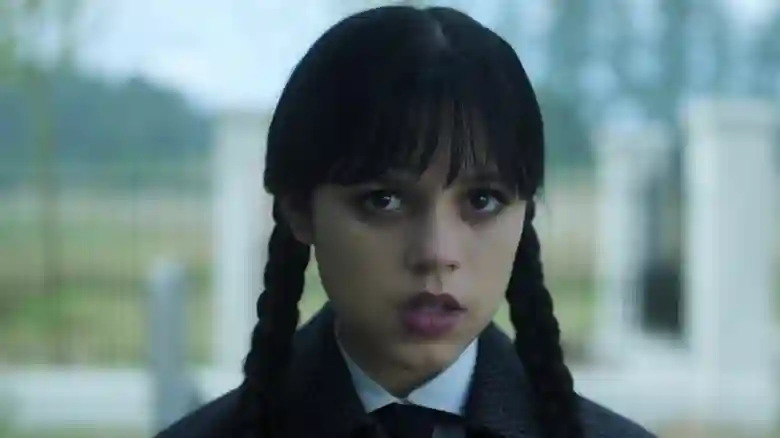
Before becoming the face of one of Netflix’s most successful series, “Wednesday,” and earning acclaim for her roles in contemporary horror films, Jenna Ortega had already crossed paths with one of the largest movie franchises in the world — the Marvel Cinematic Universe. Long before stepping into the gothic shoes of Wednesday Addams, Ortega made a brief yet memorable appearance in “Iron Man 3.” Although her role was small and often overlooked, it marked her very first experience working on a major Hollywood blockbuster and revealed early signs of the composure and charm she’d later bring to her more famous roles.
In “Iron Man 3,” released in 2013 as part of Marvel’s Phase 2 lineup, Ortega was only ten years old. Her part, while brief, connects directly to one of the film’s central story elements. Playing the Vice President’s daughter, Ortega’s character appears in a family scene during a Christmas gathering, quietly positioned in a wheelchair. The moment may last only seconds, but her presence carries symbolic weight — her character’s health condition provides the Vice President (portrayed by Miguel Ferrer) with a personal motive that causes him to conspire with the villain Aldrich Killian. In essence, Ortega’s minor role subtly influences the ethical and political layers of the plot, contributing to how the film explores power, desperation, and corruption.
Jenna Ortega’s Reflection on Her Early MCU Role
Years later, as Ortega’s career flourished, her fans revisited “Iron Man 3” after discovering her hidden appearance. In an interview, she shared her recollections of filming the scene — a surreal experience for a ten-year-old actor stepping onto a major studio set surrounded by Hollywood talent. She playfully remarked, “I take up the frame. I have one leg, and I’m the vice president’s daughter,” acknowledging the scene’s brevity while recognizing its quiet significance. Although her dialogue was cut during post-production, she fondly recalled how that small opportunity shaped her early understanding of film acting and large-scale production dynamics. Interestingly, her name never appeared in the movie’s official credits, making this cameo somewhat of a cinematic Easter egg known mostly to dedicated fans.
Reflecting on her MCU debut, Ortega mentioned that she doesn’t anticipate a return to the Marvel universe. She sees that fleeting role as a closed chapter — her one-time brush with the superhero world. Still, the moment stands as a testament to how even a small part can serve as an early stepping-stone toward a lasting acting career. For many young performers, Hollywood starts with supporting or background roles that demand confidence and focus even in limited screen time, a lesson Ortega seems to have carried forward into her later projects like “Scream,” “X,” and “Wednesday.”
Why Iron Man 3 Divided Marvel Fans
“Iron Man 3” holds a distinct place in the MCU, both for its financial triumph and for sparking debate among long-time followers of the franchise. Directed by Shane Black, the film departed from the pure action-heavy formula of its predecessors. Instead, it delved into Tony Stark’s psychological struggles following the events of “The Avengers.” This introspective tone, showcasing anxiety, trauma, and vulnerability, impressed some audiences for humanizing Iron Man but alienated others who preferred the mechanical spectacle and humor-driven bravado of earlier installments. This character-driven approach pushed the film beyond the conventional superhero template, which made it both admired and criticized.
Beyond its tonal shift, the movie sparked controversy through its handling of the Mandarin — a classic Iron Man villain with rich comic book origins. In a surprising twist, the film revealed that the Mandarin (played by Ben Kingsley) was merely an actor impersonating the true antagonist’s fabricated persona. For comic purists, this narrative choice felt like a betrayal of source material, while others applauded the creative risk for its commentary on propaganda and deception. The backlash became so iconic that Marvel later revisited the concept in “Shang-Chi and the Legend of the Ten Rings” to correct misunderstandings about the true Ten Rings leader.
Despite mixed reviews, “Iron Man 3” became a global juggernaut, surpassing the $1 billion mark at the box office and solidifying Robert Downey Jr.’s place as one of Marvel’s defining figures. It effectively closed Tony Stark’s solo trilogy with a personal, introspective edge that influenced how later MCU entries treated their heroes — as multifaceted individuals rather than invincible icons. For Jenna Ortega, her appearance in this film coincidentally placed her within Marvel history, even if only in passing. It serves as a fascinating footnote in the career of an actress who would later redefine a generation of young Hollywood talent.
From Child Actor to Leading Star
Jenna Ortega’s evolution from a child actor in a fleeting Marvel cameo to a global sensation in “Wednesday” underscores the unpredictable nature of Hollywood trajectories. Her early experience on a massive set like “Iron Man 3” introduced her to professionalism, timing, and the intricacies of blockbuster filmmaking — skills that would later prove invaluable. Over the years, her blend of emotional intensity and understated wit helped her stand out in intense roles that balance darkness and vulnerability.
Looking back, Ortega’s Marvel debut isn’t merely a trivia nugget for fans; it’s a charming reminder of beginnings. Every career, no matter how luminous, has its early sparks that might seem ordinary at the time. That single, near-silent moment in “Iron Man 3” carved the path for the confident, scene-stealing presence audiences now recognize. Her progression from an unnoticed frame to leading an internationally acclaimed series exemplifies how persistence and craft can turn fleeting opportunities into defining careers.