
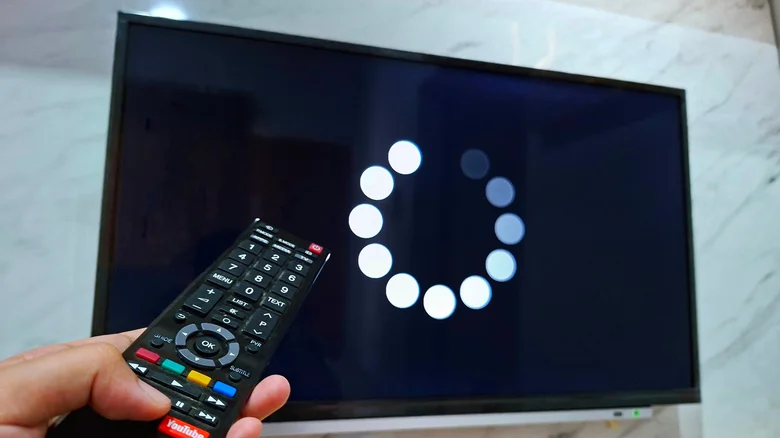
Older smart TVs frequently suffer interface lag and app abandonment as manufacturers discontinue support for aging platforms burdened by underpowered processors incapable of handling modern streaming demands. Budget models from 2018-2022 particularly struggle with 4K YouTube buffering, Netflix UI stuttering, and Hulu thumbnail grid freezes due to exhausted RAM and thermal throttled SoCs originally designed for 1080p Hulu plus basic catch-up TV. While picture quality and panel condition remain excellent, native smart functionality collapses under contemporary app complexity, prompting expensive full replacements when simple HDMI streaming sticks revive performance instantly at fraction of upgrade costs.
Streaming devices bypass television internals entirely, dedicating standalone ARM processors, 2-8GB RAM, and Wi-Fi 6 chipsets to app execution while TVs handle pure A/V passthrough through HDMI ARC/eARC. This architecture delivers 60fps 4K scrolling, instant app switching, and five-year software support absent from built-in platforms, extending 2019 Vizio D-Series utility through 2030+ when panel phosphor longevity outlasts electronics three generations. Annual $30-50 stick refreshes maintain relevance versus $800 television cycles, while HDMI-CEC unification synchronizes power states across soundbars and receivers seamlessly.
Amazon Fire TV Stick lineup balances price and power
Fire TV Stick HD ($30) resuscitates 1080p TVs through crisp Full HD decoding and Alexa voice search navigating Prime Video, Netflix, and 200+ free channels without subscription walls. Fire TV Stick 4K Select ($50) unlocks Dolby Vision/HDR10+ on capable panels alongside 1.7GHz quad-core yielding 2x interface speed versus 2020 Roku TVs, while embedded Amazon ecosystem favors Prime households with one-click X-Ray scene breakdowns and Matter smart home control through Echo integration.
Premium Fire TV Stick 4K Max ($60) adds Wi-Fi 6E tri-band eliminating 5GHz congestion, AV1 codec slashing YouTube bandwidth 30%, and 16GB storage hosting sideloaded APKs absent Google Play limitations. Ambient mode transforms idle screens into digital art frames, while Xbox Cloud Gaming (Ultimate required) streams Forza Horizon 5 at 1080p60 absent native Game Pass. All models support HDMI-CEC power sync and IR blaster learning existing TV commands, preserving universal remote simplicity.
Roku Streaming Stick excels interface purity
Roku Streaming Stick ($30) delivers content-agnostic interface prioritizing universal search across 15,000+ channels without platform favoritism, surfacing Hulu deals adjacent to Prime exclusives through neutral algorithm. Streaming Stick 4K ($40) adds Dolby Vision/Voice Remote Pro with hands-free “Hey Roku” absent Fire TV equivalent, while private listening routes audio to headphone via app without disturbing sleeping households.
Roku Streaming Stick 4K+ ($50) introduces HDR10+ dynamic metadata matching Fire Max capabilities alongside rechargeable Voice Remote (Pro) featuring lost remote finder and headphone pairing. Backlit button illumination aids couch navigation, while Ethernet adapter option ($20) stabilizes hotel streaming through unreliable Wi-Fi. Roku Channel’s 350+ free ad-supported movies rival Pluto TV without login walls, positioning Roku ecosystem as subscription-minimalist choice versus Amazon’s Prime lock-in.
Onn Google TV sticks maximize Android versatility
Onn 4K Streaming Device ($20) undercuts competitors through Full Google TV interface delivering personalized recommendations blending YouTube, Prime, and HBO Max across single scrollable row. Onn 4K Plus ($30) adds Dolby Atmos/DTS:X spatial audio passthrough matching $200 Chromecast, while embedded Google Assistant handles “play The Bear on Hulu” queries absent Alexa skill gaps.
Onn 4K Pro ($40) debuts Matter hub functionality controlling 100+ smart home brands through TV remote, Wi-Fi 6E future-proofing 6GHz networks, and 3GB RAM enabling true multitasking with Picture-in-Picture YouTube during Netflix episodes. Google Play Store unlocks 10,000+ sideload apps including Stadia emulator and Kodi, while Kids Profile sandboxes content securely. Walmart ecosystem integration surfaces daily deals contextually, positioning Onn as budget Google TV king.
Strategic selection matches TV capabilities precisely
1080p bedroom TVs pair optimally with $20-30 HD sticks prioritizing interface speed over HDR overhead; 4K living room flagships demand Dolby Vision/Wi-Fi 6 packages eliminating buffering during peak hours. Soundbar owners verify eARC passthrough before purchase, while apartment dwellers favor compact designs slipping behind wall-mounted panels unnoticed.
Voice preference dictates ecosystems—Alexa for Prime households, Google Assistant for smart home maximalists, Roku universalism for mixed subscriptions. Future-proofing weighs AV1 codec support halving streaming bandwidth, while Matter certification ensures 2030 IoT relevance. Annual replacement cycles cost $240/decade versus $3,000 television refresh, delivering 10x ROI through preserved panel investments spanning multiple streaming generations.