
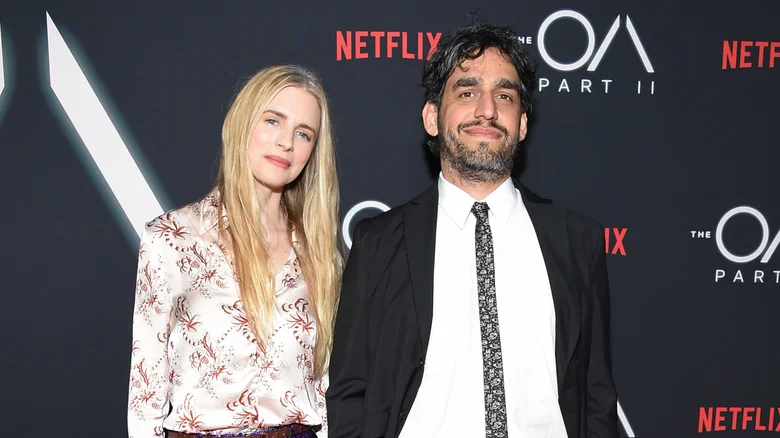
The streaming era has been defined by a constant churn of content, where series live and die by algorithms and viewer metrics. Netflix, as the pioneering force in this space, built its empire not just on licensed libraries but on groundbreaking originals that captured the cultural zeitgeist. From the political intrigue of “House of Cards” to the nostalgic horror of “Stranger Things,” these shows demonstrated the power of a platform to create must-see television. Yet, this model has also produced some of streaming’s most painful casualties, where passionate fanbases are left adrift by abrupt cancellations. Among these, the 2019 cancellation of “The OA” after its second season stands as a particularly resonant wound. Created by the visionary duo Brit Marling and Zal Batmanglij, the show was a genre-defying epic that blended metaphysical mystery with raw human emotion, concluding its second season on a breathtaking meta-narrative cliffhanger that demanded resolution. The decision to end it remains, for many, Netflix’s most puzzling and frustrating creative misstep, a choice that seems to contradict the platform’s own history of reviving canceled gems from other networks.
The Vision and The Cliffhanger
“The OA” was conceived as a five-part story, an ambitious narrative journey across dimensions and realities. Its first season introduced Prairie Johnson (Marling), a blind woman who reappears after a seven-year disappearance with her sight restored, recruiting a disparate group of outsiders to help her rescue other missing persons through a series of mysterious movements. The second season, “Part II,” expanded the universe exponentially, venturing into a surreal San Francisco and culminating in a mind-bending finale where the characters literally jumped into our reality, discovering that their lives were a television show called “The OA” on Netflix. This audacious ending was not just a cliffhanger; it was a promise of a completely new narrative paradigm for a third season, breaking the fourth wall in an unprecedented way. It was a creative high-wire act that left fans exhilarated and desperate to see where the story could possibly go next, making the subsequent cancellation feel like a profound breach of narrative trust.
Theories Behind the Cancellation
Netflix’s official statement at the time expressed pride in the “16 mesmerizing chapters” and gratitude toward Marling and Batmanglij, citing standard corporate politeness. The unspoken reason almost certainly lay in the data. Netflix’s renewal decisions are famously driven by a complex calculus of viewership versus cost. While “The OA” cultivated a intensely devoted fanbase, its viewership may not have achieved the broad, mainstream numbers of a “Stranger Things,” and its dense, philosophical narrative likely had a higher acquisition cost per viewer. Some speculated that the meta-ending itself contributed to its demise, potentially confusing the algorithm or being misread as a conclusion. Other fans even theorized the cancellation was an elaborate marketing stunt tied to the show’s own plot—a theory that proved tragically optimistic. The passionate real-world protests, including gatherings outside Netflix’s offices, demonstrated a level of engagement few series ever achieve, but it was not enough to sway the bottom-line metrics.
A Contrast in Investment Decisions
The sting of the cancellation is sharpened by Netflix’s subsequent investment choices. In the years since, the platform has greenlit numerous high-budget, spectacle-driven films that have been critically panned. Examples like the $150 million “Heart of Stone” (31% on Rotten Tomatoes) or the $320 million “The Electric State” (14%) represent massive financial bets on content that failed to resonate with critics or cultivate a lasting cultural footprint. Meanwhile, “The OA” maintained strong critical scores (84% on Rotten Tomatoes) and a deeply engaged audience. This disparity highlights a recurring tension in streaming: the pursuit of flashy, algorithm-friendly tentpoles versus the nurturing of singular, artist-driven stories that build dedicated communities. Netflix has shown a willingness to revive other canceled shows like “Manifest” and “Lucifer,” making its refusal to revisit “The OA” feel like a specific dismissal of its particular brand of ambitious, uncompromising storytelling.
The Lingering Legacy and Lost Potential
More than six years later, the question of a revival persists, but hope has largely faded. The unique circumstances of the Season 2 ending, which would have required the actors to play alternate versions of themselves in a world where “The OA” was a show, presented a logistical challenge but also a phenomenal creative opportunity. The continued discussion and analysis of the show online are testaments to its enduring impact. It stands as a poignant case study in the modern content landscape: a show that was arguably ahead of its time, sacrificed not for a lack of love, but for a perceived lack of scale. Its cancellation is remembered not just as the loss of a single story, but as a symbolic moment where corporate data seemingly overruled artistic vision and fan passion, leaving one of streaming’s most original and daring narratives forever incomplete. For subscribers, it serves as a reminder that in the streaming economy, even a masterpiece is only as secure as its last performance report.