

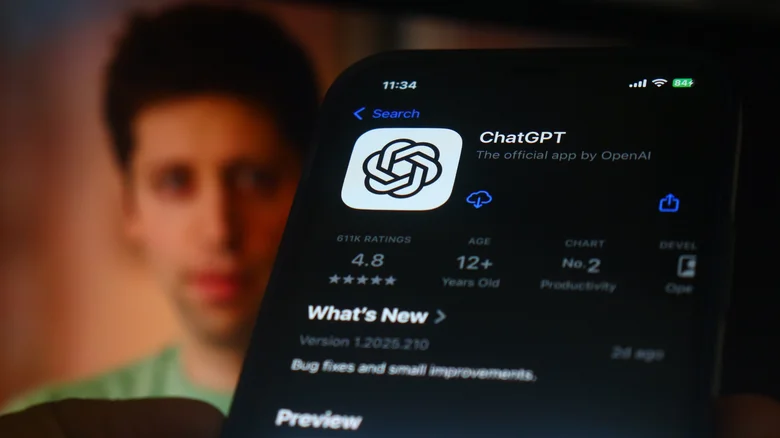
Artificial intelligence has thrust energy consumption into the spotlight as tech giants race to fuel their ambitious expansions. Major players like Meta and Google eye nuclear power plants to meet surging demands, while OpenAI explores futuristic concepts like orbital data centers. These grand visions spark legitimate questions about why AI requires such massive electricity, and more practically, how much power everyday interactions with tools like ChatGPT actually draw from the grid.
OpenAI provided some insight through CEO Sam Altman’s June blog post, claiming an average ChatGPT query consumes just 0.34 watt-hours. He compared this tiny figure to an oven running for slightly over a second or a efficient lightbulb glowing for a couple minutes, aiming to reassure users that personal AI use remains environmentally negligible. While the statistic offers a starting point, its lack of methodological details leaves room for skepticism about its completeness and representativeness.
Challenges in Measuring AI’s True Energy Footprint
Quantifying ChatGPT’s energy use proves far more complex than a single headline number suggests. Queries span wildly different tasks—simple factual questions versus intricate code generation or image creation—each demanding varying computational intensity. Without disclosure on what constitutes Altman’s “average,” users can’t gauge relevance to their own patterns, whether casual chit-chat or heavy professional workloads.
The reported figure likely captures only inference phase GPU usage, where models generate responses, ignoring substantial overhead from cooling fans, liquid cooling loops, network switches, persistent storage arrays, and power conversion inefficiencies. Data centers guzzle electricity for climate control alone, often matching compute demands in hot climates. Backup diesel generators and security infrastructure add further layers, complicating holistic accounting across sprawling facilities.
Model specificity remains another black box. Does 0.34 watt-hours reflect GPT-4, lighter variants, or blended traffic? Rapid iteration exacerbates this, as GPT-5’s release shortly after the blog reportedly spiked power needs by factors of 8 or more per independent benchmarks. Evolving architectures demand ongoing transparency, yet companies prioritize competitive edges over public energy audits.
Contextualizing ChatGPT Against Everyday Power Use
To grasp scale, consider cumulative impact. A single user firing 100 daily queries totals roughly 34 watt-hours, akin to charging a smartphone once. Multiply across ChatGPT’s hundreds of millions of monthly actives, and daily inference alone rivals small cities’ consumption. Training phases dwarf this further—one GPT-4 run allegedly matched thousands of households’ annual electricity—though end-users interact solely with deployed inference.
Comparisons illuminate priorities. Streaming one Netflix hour in HD consumes about 0.7 watt-hours, double a ChatGPT query, yet faces less scrutiny. Google searches average 0.3 watt-hours each, positioning ChatGPT as comparably efficient despite superior reasoning. Voice assistants like Alexa or Siri draw similar per-interaction power, but lack ChatGPT’s contextual memory demanding sustained compute.
| Activity | Energy per Use (Wh) | Equivalent Time |
|---|---|---|
| ChatGPT Query (avg) | 0.34 | Oven: 1 sec |
| Google Search | 0.3 | Lightbulb: 2 min |
| Netflix HD Hour | 0.7 | Laptop charge: 5% |
| Image Generation | 3-10 | Microwave: 1 min |
Broader Implications for AI Sustainability
Energy opacity fuels valid environmental concerns amid AI’s exponential growth. Hyperscalers commit billions to renewable matching and efficiency gains—liquid cooling slashes data center power use effectiveness by 40%—yet nuclear revival signals grid strains. Decentralized inference via edge devices promises reductions, pushing compute closer to users and trimming transmission losses.
Transparency initiatives emerge slowly. Google’s 2024 report detailed AI-driven carbon offsets through optimized routing, while Microsoft touts hydro-powered facilities. OpenAI could lead by publishing model cards with energy profiles, query distributions, and carbon equivalents, empowering users to minimize footprints through mindful prompting.
User-side optimizations matter too. Concise queries reduce token processing; batching questions cuts overhead; avoiding redundant rephrasing streamlines inference. Offline models on phones bypass cloud entirely for basic tasks, though lacking frontier capabilities.
Balancing Innovation with Responsible Power Use
ChatGPT’s modest per-query draw belies systemic challenges scaling intelligence democratically. Altman’s analogy humanizes the tech, framing AI as frugal compared to physical appliances, yet aggregate billions of interactions demand infrastructure revolutions. As models grow smarter, efficiency must outpace capability lest AI’s promise succumbs to planetary limits.
Optimism persists through rapid advances—quantization shrinks models 4x with minimal quality loss; speculative decoding anticipates tokens pre-compute. Forward-thinking regulation could mandate energy labeling akin to appliances, standardizing comparisons.
Ultimately, 0.34 watt-hours serves as directional truth, not exhaustive gospel. Everyday users contribute negligibly, but collective scale underscores urgency for industry-wide accountability. Thoughtful engagement—prioritizing substance over verbosity—lets everyone partake in AI’s transformation without excessive ecological cost.