
For years, Google Photos has served as the central repository for personal memories for billions of users, offering powerful organization, cloud backup, and increasingly sophisticated AI-powered editing tools. However, a significant gap has persisted in its ecosystem: the lack of a native, dedicated application for the living room’s centerpiece, the television. While casting photos to a TV is possible, it lacks the curated, seamless experience that a native app can provide. This is set to change in a meaningful way, as Samsung has announced a strategic partnership with Google to bring the Google Photos experience directly to select Samsung smart TVs. This integration promises to transform the television from a passive content consumption device into an active, dynamic canvas for personal nostalgia and shared experiences. By bridging the gap between the pocket and the big screen, this development aims to make reliving life’s most cherished moments a more immersive, communal, and intelligent activity.
A Phased Rollout Centered on Curated Memories
Samsung’s plan for the Google Photos TV app involves a deliberate, phased rollout beginning in March 2026. The initial phase will focus exclusively on the “Memories” feature, which will enjoy a six-month exclusivity period on Samsung televisions. This feature is designed to automatically surface curated stories and slideshows based on the people, locations, and events that populate a user’s photo library. Imagine a TV that, throughout the day, gently cycles through highlights from a recent family vacation, a child’s birthday party, or scenes from a beloved hiking trail, all without any manual prompting. This ambient display turns the TV into a living digital photo album when not in use for traditional media. The implementation details regarding how memories are selected—whether fully automated by Google’s algorithms or guided by user preferences—remain to be fully detailed. Nonetheless, this represents a significant step toward making personal media a more integrated part of the home environment, moving beyond the need to manually pull out a phone to share photos with others in the room.
Generative AI Editing Comes to the Big Screen
Beyond passive viewing, the partnership aims to introduce interactive creation directly on the television. A slated “Create with AI” feature, powered by Google’s generative AI technology (referenced in the industry as Nano Banana), will allow users to remix their photos into videos or apply artistic templates without needing a secondary device. This suggests a future where families can gather around the TV to collaboratively turn a batch of vacation photos into a polished short film using intuitive on-screen tools. The prospect of performing complex, AI-driven edits directly on the TV’s hardware is ambitious and points to the increasing computational power embedded in modern smart TVs. While the exact user interface for these editing functions is still unclear, their inclusion signals a bold vision where the television becomes not just a display, but a creative workstation for personal media, lowering the barrier to creating professional-looking memory compilations.
Integration with Samsung’s Ecosystem and Ambient Displays
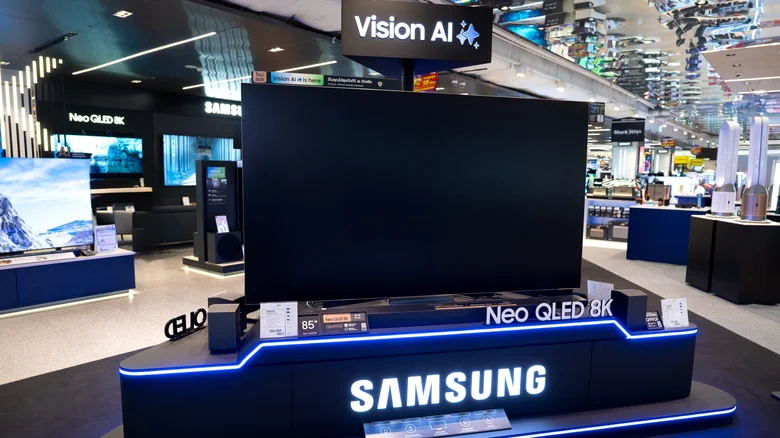
The Google Photos app will not exist in isolation but will be deeply woven into Samsung’s own smart TV ecosystem. The company has indicated that Google Photos content will be integrated into features like Daily+ and Daily Board. These are ambient modes that display information such as weather, calendars, and artwork when the TV is in a standby-like state. The inclusion of personal photos in this rotation means your TV’s idle screen could seamlessly transition from a beautiful landscape painting to a curated slideshow of your own landscape photography or family portraits. Furthermore, the app will connect with Samsung’s Vision AI Companion (VAC), suggesting potential for voice-activated commands to search for or display specific photos or albums. This level of system integration is key to creating a fluid, intuitive experience that feels like a natural extension of the TV’s core functions rather than a bolted-on application.
Implications for Privacy and the Future of TV Platforms
The arrival of such a personal app on a shared living room device inevitably raises questions about privacy and user control. Samsung has mentioned that personalized results will be offered based on the content of memories, but the specifics of data processing—whether it occurs on the device or in the cloud—are not yet fully clarified. Users will likely desire granular controls over which albums or people are included in the ambient displays, especially in households with diverse audiences. The success of this feature will hinge on transparent privacy settings and intuitive controls. Looking beyond Samsung, the six-month exclusivity period strongly hints that Google envisions Google Photos as a cross-platform TV app. If successful on Samsung TVs, it could rapidly expand to other major smart TV platforms like LG webOS, Vizio SmartCast, and Android TV/Google TV devices. This would establish Google Photos as a universal standard for big-screen memory viewing, further cementing its position as the dominant personal media cloud service and reshaping how we interact with our most precious digital possessions in the heart of our homes.