
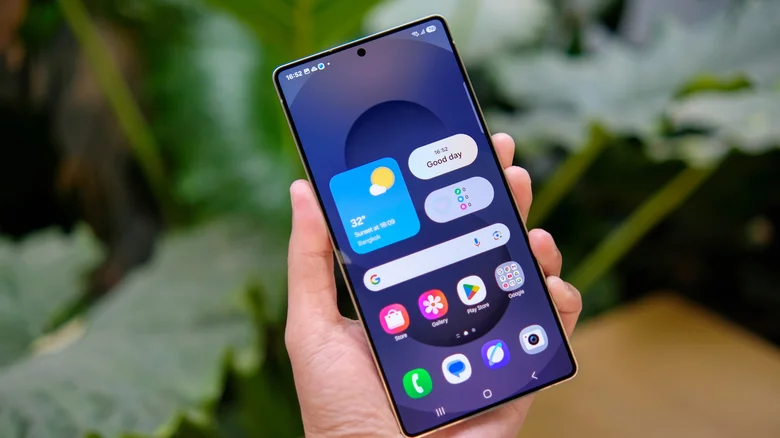
As the highly anticipated unveiling of Samsung’s Galaxy S26 lineup draws closer, leaks surrounding the new flagship series are increasing in number and detail. Among the most intriguing rumors to surface so far involves a next-generation privacy feature that could redefine how displays protect user information. According to reputable leaker yeux1122 on the Korean Naver Blog, a leaked version of Samsung’s upcoming One UI 8 software includes a new “Privacy Display” mode designed to limit visibility from side angles. If accurate, this addition could signal a major leap in smartphone privacy and display engineering.
This rumored feature would serve as a built-in, dynamic privacy filter that automatically makes the screen difficult to read from the sides, effectively deterring shoulder-surfing or unwanted peeking. Traditional privacy screen protectors rely on polarizing layers applied physically to the screen, but Samsung’s approach appears to integrate the functionality at the software or display driver level. Early screenshots suggest that this feature might automatically activate during sensitive scenarios — such as when typing passwords, entering a PIN, or viewing private messages. This could represent a more intelligent and adaptable privacy system than any hardware accessory currently available.
The potential introduction of a built-in privacy display represents another step in Samsung’s ongoing effort to push the boundaries of smartphone screen innovation. Over the past few years, the company has refined its AMOLED panels to deliver brighter, more energy-efficient, and environmentally sustainable displays. The Galaxy S25 series already introduced glare-free screen technology, helping eliminate reflections under direct sunlight. The rumored Privacy Display upgrade could build upon that success, combining visibility control with enhanced user protection. In doing so, it would reinforce Samsung’s reputation for leading the industry in display advancements, especially as competitors like Apple take a more incremental approach to visual hardware evolution.
A Leap Forward in On-Screen Privacy
If this feature debuts with the Galaxy S26 lineup, it may fundamentally shift how smartphone users perceive privacy and security. Traditional smartphone designs have long focused on safeguarding internal data, but on-screen privacy is often neglected. Everyday activities such as checking banking apps, entering authentication codes, or composing passwords in public are moments of vulnerability that even strong encryption cannot address. The alleged Privacy Display technology directly tackles this problem by obscuring sensitive content from peripheral views, ensuring that only the person directly in front of the device can see the screen clearly.
This innovation arrives at a time when digital theft is evolving beyond hacking and phishing. Reports from security analysts and publications like The Wall Street Journal have shown how thieves often observe people entering passcodes before stealing phones, essentially bypassing advanced security features like encryption and biometrics. By making it nearly impossible to see on-screen inputs from a side angle, Samsung’s approach could effectively disrupt this type of crime. The feature’s potential ability to toggle automatically, depending on app or content sensitivity, would add a crucial layer of real-time security without requiring manual activation.
Samsung vs. Apple: A Tale of Display Strategies
Samsung’s momentum in display technology highlights a widening gap between the Korean tech giant and its biggest rival, Apple. When the Galaxy S25 debuted in 2025, one of its standout innovations was the glare-free display, significantly reducing reflections and improving visibility under bright conditions. While early rumors suggested Apple was planning to adopt a similar anti-glare approach for the iPhone 17 Pro, that never materialized. Instead, Apple’s focus remained on durability improvements, touting tougher and more scratch-resistant glass rather than new viewing experiences.
With the rumored Galaxy S26 privacy feature, Samsung again seems poised to outpace Cupertino in delivering user-centric hardware improvements. Apple continues to prioritize software-based privacy measures — such as app tracking transparency, on-device Siri processing, and enhanced permissions — but has not matched Samsung’s recent investments in display-level privacy innovation. If the Privacy Display turns out to be a success, it could set a new standard for physical data protection, pushing Apple to respond in future iPhone generations.
Looking Ahead to the Galaxy S26 and Beyond
The upcoming Galaxy S26 series, expected to launch next month, is shaping up to be one of Samsung’s most ambitious releases yet. Alongside its privacy display, leaks suggest continued refinements to camera technology, AI-assisted image processing, and sustainability initiatives in materials and power management. But the Privacy Display could easily become the most talked-about feature of the series — not just for its novelty, but for its practical implications in real-world use.
Meanwhile, Apple’s rumored technologies for 2026 and beyond center on under-display Face ID, potentially debuting with the iPhone 18 Pro. While this development would mark an engineering milestone for Apple’s design team, it does little to address real-time visual privacy in everyday use. If Samsung’s innovation takes hold, it may push the entire smartphone industry to rethink what display security means in a post-biometric era.
The growing conversation around privacy displays demonstrates how central security has become in modern device design. Where past smartphone battles were fought over resolution and refresh rates, future competition may revolve around how intelligently a phone can protect its user’s data — even from wandering eyes. Should the Galaxy S26 truly deliver this blend of hardware and software-based privacy, Samsung will once again set itself apart as an innovator redefining what a smartphone screen can do.