

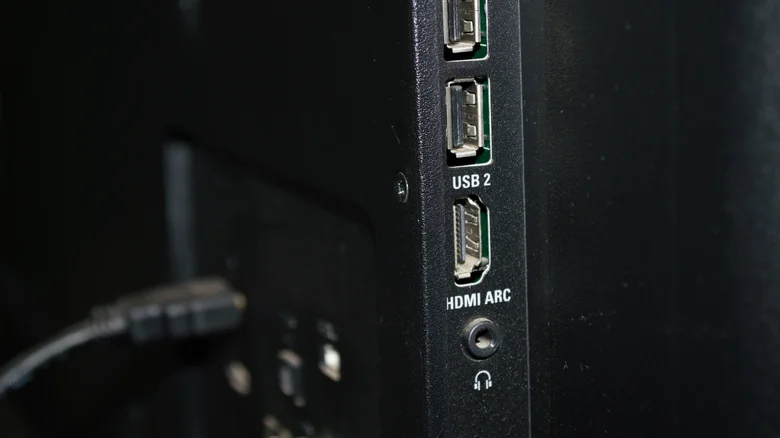
In the interconnected world of modern home entertainment, the HDMI cable serves as a critical digital lifeline, conveying audio and video signals from sources to displays with a single connection. These ubiquitous cables link gaming consoles, streaming devices, and computers to televisions and monitors, forming the backbone of our viewing experiences. A common misconception, however, is that any HDMI cable will suffice, leading many to purchase based solely on price or availability. This overlooks a fundamental technical divide: the significant performance gap between standard and high-speed HDMI cables. While a basic cable can establish a connection, it may become a bottleneck for high-fidelity content, resulting in a degraded experience. Understanding the specifications and capabilities of your HDMI cable is not merely a technical concern but a practical necessity for anyone seeking to unlock the full potential of their audio and video equipment, ensuring that the quality of the content is preserved from source to screen.
The Data Highway: Bandwidth as the Defining Factor
The core differentiator between HDMI cable types is their supported bandwidth, measured in gigabits per second (Gbps). Bandwidth represents the volume of data the cable can transfer at any given moment. Standard HDMI cables, often sufficient for older or lower-resolution devices, typically support bandwidths up to approximately 5 Gbps. This was adequate for the era of 1080p high-definition video and basic surround sound formats. However, the advent of 4K Ultra HD, high dynamic range (HDR), and advanced audio codecs like Dolby Atmos has dramatically increased data requirements. A 4K HDR video stream with multi-channel object-based audio is a vastly more data-intensive signal. A standard cable lacks the capacity for this data influx, much like a narrow single-lane road cannot handle the traffic flow of a major highway during rush hour. This bottleneck can manifest not as a simple reduction in resolution, but as complete signal failures, intermittent black screens, flickering, or a complete failure to establish a handshake between devices. The high-speed HDMI specification was created to eliminate this bottleneck, offering significantly higher bandwidth to accommodate modern data loads.
Ensuring Stability for High-Resolution Video
The most immediate benefit of a high-speed HDMI cable is the delivery of stable, high-resolution video. For content at 4K resolution, especially at refresh rates of 60Hz or higher, a reliable high-speed cable is not a luxury but a requirement. These cables are designed to handle bandwidths of 18 Gbps or more, which is the baseline for uncompressed 4K/60Hz HDR content. Using a standard cable in this scenario forces the source device to either downgrade the signal output, resulting in a lower-quality picture, or to struggle with an unstable connection that causes visual artifacts. The result is that your expensive 4K television and premium streaming content cannot perform as intended. Furthermore, for enthusiasts exploring 8K content or high-frame-rate 4K gaming at 120Hz, even higher specifications like Ultra High Speed HDMI cables, with bandwidth up to 48 Gbps, become essential. The right cable ensures that every pixel of detail, every shade of color in an HDR gradient, and every smooth motion in a fast-paced game is transmitted faithfully and without interruption, providing the immersive experience that modern hardware is designed to deliver.
Preserving High-Fidelity Audio Formats
While video often receives primary focus, HDMI is a unified audio/video interface, and cable quality is equally vital for sound. Advanced audio formats such as Dolby TrueHD, DTS-HD Master Audio, and particularly Dolby Atmos or DTS:X are extremely data-rich. These lossless, object-based soundtracks contain detailed spatial information that creates a three-dimensional audio field. Transmitting this complex audio data alongside high-resolution video requires substantial and consistent bandwidth. A standard cable may force the audio signal to be compressed or downgraded to a simpler format, stripping away the layers of detail and directionality that define a premium home theater experience. A high-speed HDMI cable guarantees that these sophisticated audio streams are passed through intact from your Blu-ray player, game console, or media streamer to your AV receiver or soundbar. This ensures that the subtle ambiance of a film’s soundtrack and the precise directional cues in a video game are rendered with full clarity, allowing your audio system to perform to its utmost capability.
Future-Proofing Your Entertainment Setup
Investing in high-speed HDMI cables is also an act of future-proofing. As video standards continue to evolve, with advancements in resolution, refresh rate, and dynamic range already on the horizon, the demand for bandwidth will only increase. A quality high-speed or ultra-high-speed cable purchased today will remain compatible with next-generation devices, protecting you from the need for repeated upgrades. It also provides headroom for current features that are bandwidth-sensitive, such as Variable Refresh Rate (VRR) for smoother gaming and Quick Media Switching (QMS) to eliminate screen blackouts when changing content sources. Ultimately, the choice of HDMI cable is a foundational one. In a system where every component, from the display to the speaker, is chosen for quality, the cable that connects them all should not be the weakest link. Selecting a certified high-speed HDMI cable is a small but decisive step toward ensuring that your entire entertainment ecosystem operates in harmony, delivering the stunning sight and sound that modern technology promises without compromise.