

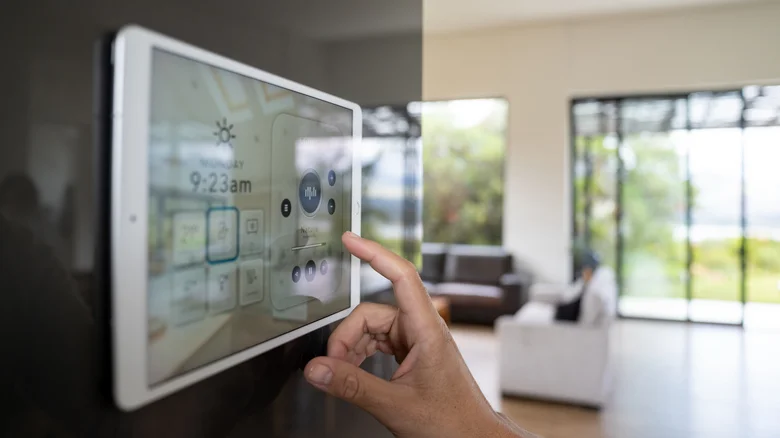
The vision of a seamlessly automated smart home is often predicated on a constant, reliable internet connection, leaving users vulnerable to service outages, latency issues, and potential privacy concerns associated with cloud-dependent devices. However, an increasingly viable and sophisticated alternative exists in the form of locally controlled smart home ecosystems. These systems utilize wireless protocols like Zigbee and Z-Wave to create a self-contained network within the home, independent of broadband internet. By shifting processing and communication away from external servers, a local smart home enhances security, guarantees responsiveness, and ensures core automation functions remain operational even during an internet outage. Building such a system requires a deliberate selection of compatible hardware, starting with a central hub and extending to sensors, switches, and actuators designed for local communication.
The Central Hub: The Brain of a Local Ecosystem
The cornerstone of any internet-free smart home is a dedicated local hub. This device acts as the central coordinator, creating its own wireless mesh network using protocols like Zigbee, Z-Wave, or Thread, and processing automation rules locally. Popular and powerful options include the Hubitat Elevation hub and software platforms like Home Assistant (often run on a Raspberry Pi or dedicated mini-PC). These hubs do not require an internet connection for basic device communication and automation execution. They provide a local web interface or app that remains accessible on your home network, allowing you to control lights, locks, and sensors directly. When choosing a hub, key considerations are the specific protocols it supports (to match your chosen devices), its processing power for complex automations, and the usability of its companion software for creating and managing those automations without cloud dependency.
Selecting Locally Compatible Devices
Constructing a robust local network requires devices engineered to communicate via local protocols, not just Wi-Fi. For lighting, companies like Philips Hue (using its own Zigbee-based hub for local control) and Inovelli offer smart bulbs and switches that connect directly to a Zigbee or Z-Wave network. For critical functions like door locks, security sensors, and thermostats, brands like Zooz, Aeotec, and Qubino manufacture Z-Wave variants that ensure lock/unlock commands and intrusion alerts are processed within the home network without a cloud round-trip. Motion sensors, leak detectors, and climate sensors from Aqara (Zigbee) can trigger immediate local automations, such as turning on lights or shutting off water valves, with near-instantaneous response times impossible with cloud-reliant systems.
Designing Reliable and Responsive Automations
The primary advantage of a local system is the ability to create automations that are both private and exceptionally fast. Using a hub’s local rule engine, you can define complex “if this, then that” scenarios that execute entirely within your home’s network. For example, a motion sensor detecting movement at your front door after sunset can instantly trigger a pathway of lights to turn on, with the signal traveling from sensor to hub to light bulbs in milliseconds. Similarly, a leak sensor under a dishwasher can immediately trigger a smart water valve to close, preventing flooding without waiting for a cloud server to relay the command. This local processing eliminates the latency and single point of failure inherent in cloud-dependent automations, creating a smarter and more reliable home environment.
Balancing Local Control with Remote Access
A fully local smart home does not necessarily mean complete isolation. Most local hubs offer optional integration with internet services for remote access and voice control. You can choose to connect your Hubitat or Home Assistant instance to your home network’s router, which then allows for secure, encrypted remote access via a VPN or the hub’s own tunneling service. This provides the best of both worlds: all critical automations and controls operate locally for speed and reliability, while you retain the ability to check status or perform actions when away from home through a secure channel. This hybrid approach maintains the core benefits of local processing while adding convenient remote functionality as an optional layer, not a dependency.
Building an internet-free smart home based on local protocols like Zigbee and Z-Wave represents a commitment to privacy, reliability, and instantaneous control. By investing in a capable local hub and selectively choosing compatible devices for lighting, security, and environmental monitoring, users can create a robust automation ecosystem that operates independently of broadband outages and external servers. The result is a home that responds with unparalleled speed to local events, protects sensitive data within the local network, and provides enduring functionality free from the whims of cloud service availability. For those seeking the ultimate in smart home resilience and security, a locally controlled system is not just an alternative—it is the superior architectural choice.