

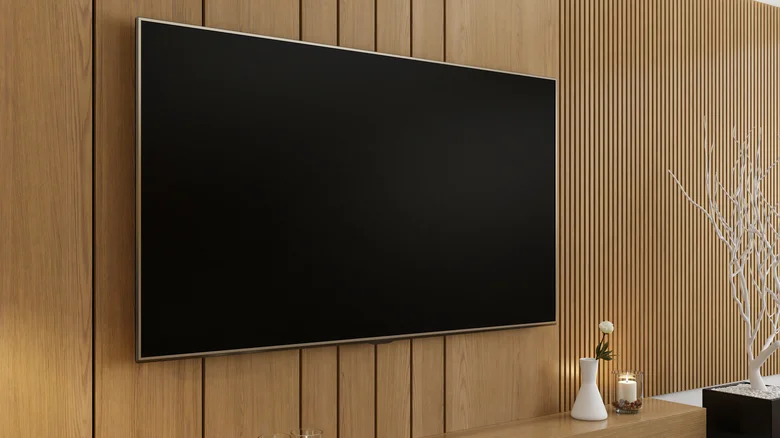
Wireless TVs promise revolutionary cable-free installations transforming living rooms into minimalist masterpieces, eliminating visible HDMI clutter while maintaining 4K 165Hz gaming performance and studio-grade picture quality. CES 2023 prototypes from Displace TV and LG’s Signature OLED series evolved into production models by 2025, delivering true wall-mounted elegance through proprietary wireless transmission boxes. Priced from $2,499 for 27-inch displays to $5,999 for premium 55-inch variants, these luxury televisions target design-conscious consumers prioritizing aesthetics over incremental performance gains available in wired alternatives half the cost.
Wireless TV Technology Explained
Wireless televisions separate processing hardware from display panels, beaming uncompressed 4K HDR signals through proprietary 60GHz mmWave transmission achieving 10Gbps bandwidth with sub-1ms latency. LG’s Zero Connect Box consolidates four HDMI 2.1 ports, Ethernet, USB, optical audio, and antenna inputs into a sleek puck hidden behind furniture or within AV cabinets.
Displace TV achieves complete cable elimination through integrated lithium-polymer batteries powering 27-55 inch panels for 2-4 hours between charges, with modular battery packs extending runtime indefinitely. Both systems require power connections – LG via traditional cords, Displace through discreet barrel connectors – but eliminate all video/audio/data cabling entirely.
Transmission maintains full HDMI 2.1 feature sets including VRR, ALLM, 4K120, and Dolby Vision despite wireless delivery, rivaling direct cable performance through advanced error correction and adaptive bitrate management.
Displace TV vs LG Wireless Comparison
| Feature | Displace TV (27-55″) | LG OLED M5 (77-97″) |
|---|---|---|
| Starting Price | $2,499 (27″) | $3,799 (77″) |
| Power Cable | Required (battery powered) | Required | Transmission Range | 30 feet line-of-sight | 32 feet line-of-sight |
| HDMI Ports | 4x HDMI 2.1 (box) | 4x HDMI 2.1 (Zero Connect) |
| Gaming Features | 4K165Hz, VRR, ALLM | 4K165Hz, VRR, Dolby Vision G-Sync |
| Battery Life | 2-4 hours (extendable) | None |
Primary Advantages of Wireless Design
Aesthetic perfection defines wireless television’s singular compelling advantage. Wall-mounted displays achieve floating perfection without visible cabling snaking down walls or protruding equipment racks disrupting sightlines. Interior designers embrace the technology for modern living rooms, boardrooms, and luxury hotels prioritizing uninterrupted visual flow.
Installation simplifies dramatically – single power connection replaces multi-cable wall penetrations and conduit routing. Remote placement of transmission boxes enables flexible equipment positioning behind furniture, within cabinets, or across rooms without signal degradation.
Gaming performance matches direct HDMI connections through preserved bandwidth and low-latency transmission protocols certified by NVIDIA G-Sync and AMD FreeSync Premium Pro.
Significant Premium Price Considerations
Wireless technology commands 2-3x premiums versus equivalent wired panels. Displace’s 27-inch Basic model costs $2,499 while Samsung’s 55-inch S95F OLED retails $1,999 on sale. LG’s 77-inch M5 reaches $3,799 versus comparable 77-inch competitors at $2,500-3,000.
Core picture quality, contrast ratios, and processing capabilities mirror wired siblings using identical panel technologies – LG’s MLA+ OLED and Displace’s proprietary LCD implementations. Wireless transmission imposes no visual compromises beyond line-of-sight positioning requirements.
Practical Use Case Analysis
Wireless TVs excel in specific scenarios justifying premiums.
Open-concept living rooms benefit most from cable-free wall mounting creating floating digital art canvases. Luxury home theaters hide equipment racks completely while maintaining audiophile-grade connectivity. Commercial installations streamline deployments across hotel chains and corporate offices.
Traditional setups with visible cable management or equipment shelves gain minimal practical benefit justifying 200%+ markups. Gamers and home theater enthusiasts prioritize panel technology and processing power over transmission method given equivalent performance delivery.
Installation and Optimization Guide
Maximize wireless television performance through proper deployment.
Position transmission box with direct line-of-sight to display maintaining 30-32 foot maximum separation. Mount One Connect/Zero Connect units 3-5 feet above floor level avoiding furniture obstruction. Utilize included IR repeaters ensuring remote control functionality across walls.
Configure HDMI CEC for unified power control and input switching. Enable Game Mode disabling post-processing during console sessions preserving input latency below 10ms. Update transmitter firmware quarterly ensuring latest codec optimizations and security patches.
Investment Decision Framework
Evaluate wireless TVs through three lenses: aesthetic priority, installation constraints, and budget tolerance. Design-obsessed consumers with visible wall-mounted displays in entertaining spaces justify premiums through transformative visual impact. Equipment-hidden home theaters gain flexibility without performance tradeoffs.
Budget-conscious buyers achieve 95% visual experience through wired alternatives at half cost, redirecting savings toward superior sound systems or larger panels. Wireless represents luxury evolution rather than technological revolution – compelling for specific aesthetics, unnecessary for performance-focused buyers.
Future battery advancements may eliminate Displace’s sole remaining cable while 100Gbps wireless HDMI 3.0 promises mainstream adoption. Current implementations deliver promised freedom at corresponding luxury pricing for early adopters prioritizing form alongside proven function.