

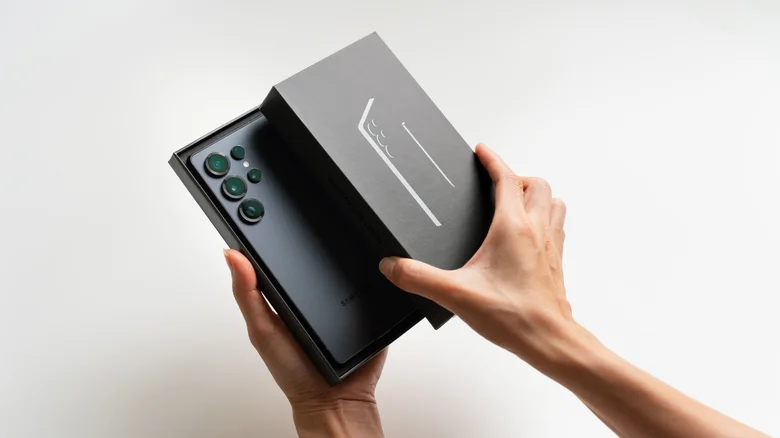
Within the fiercely competitive Android flagship landscape, Samsung’s Galaxy S25 Ultra and Google’s Pixel 10 Pro stand as titans, each delivering exceptional cameras, blazing processors, enduring battery life, and sophisticated AI capabilities that blur the line between hardware excellence and software perfection. Unlike Apple’s more predictable iPhone hierarchy defined by annual iterations, Android’s top tier pits ecosystem giants against each other, forcing buyers to weigh nuanced trade-offs in design philosophy, integration depth, and long-term ownership experience. Both phones represent pinnacle achievements—Samsung’s engineering marvel versus Google’s software-native masterpiece—but Consumer Reports data reveals a clear verdict amid their neck-and-neck rivalry.
Choosing between these flagships hinges less on raw specifications than ecosystem alignment and usage priorities: Samsung transforms your phone into a SmartThings command center seamlessly orchestrating TVs, appliances, and wearables, while Pixel delivers Android in arguably its purest form with immediate access to bleeding-edge features and unmatched Google service optimization. Samsung appeals to multi-device households craving universal connectivity; Pixel captivates software purists seeking Google’s direct vision of Android unfiltered through manufacturer customization. Understanding these foundational differences clarifies which phone elevates your specific digital life most effectively.
Consumer Reports crowns Galaxy S25 Ultra overall winner
Consumer Reports’ comprehensive evaluation positioned the Galaxy S25 Ultra as marginally superior to the Pixel 10 Pro across critical categories including camera performance, display excellence, battery endurance, and build durability, though Samsung’s larger chassis contributes to its battery advantage. Interestingly, Samsung outperformed even the smaller Pixel 10 Pro (non-XL variant) in direct comparisons, suggesting broad-spectrum excellence rather than size-dependent dominance. Both phones earned high marks for rear camera versatility and screen quality, but Samsung’s seven-year update commitment matches Pixel’s legendary support while delivering superior raw horsepower.
Qualcomm’s custom Snapdragon 8 Elite for Galaxy chipset propels Samsung past Google’s Tensor G5 despite Pixel’s 16GB RAM advantage (versus S25 Ultra’s 12GB), enabling smoother multitasking, gaming, and video encoding where thermal throttling differentiates prolonged sessions. Samsung’s penta-camera array offers greater photographic flexibility—100MP main, ultrawide, 3x/10x telephoto, macro—while Pixel’s computational photography produces consistently superior selfies through 42MP sensor paired with Google’s peerless image processing algorithms. Daily drivers benefit from Samsung’s tangible performance edge; photography enthusiasts may prefer Pixel’s intelligent processing magic.
Performance supremacy through Snapdragon dominance
Samsung’s Snapdragon 8 Elite customization yields benchmark-crushing advantages in GPU-intensive tasks, 4K/8K video recording, and ray-traced gaming that expose Tensor G5 limitations despite Google’s AI acceleration focus. Real-world scenarios—extended Adobe Premiere rushes, Genshin Impact max settings, emulator retro gaming—favor Galaxy’s thermal architecture and raw compute, preventing the stuttering common in Tensor-powered flagships under sustained loads. Pixel counters with Gemini Nano optimizations for on-device AI like Magic Editor expansions and real-time translation, but Samsung matches comprehensively through Galaxy AI suite including Circle to Search and Instant Slow-Mo.
Multitasking reveals further gaps: Samsung fluidly juges twelve apps across split-screen triads while Pixel occasionally reloads background processes despite RAM superiority. Battery tests confirm S25 Ultra’s 5,000mAh capacity sustains 14+ hours mixed usage versus Pixel’s respectable 12 hours, bolstered by larger silicon die efficiency. Charging speeds tilt Samsung further—65W wired surpasses Pixel’s 37W, while both support 15W Qi2 wireless. Power users prioritizing speed and stamina lean Galaxy; AI specialists tolerate modest trade-offs for Google’s software-first approach.
Camera systems showcase divergent philosophies
Samsung’s hardware-forward imaging deploys specialized lenses for every scenario—variable 100MP primary captures moon shots rivaling dedicated astro-cams, 50MP ultrawide rivals main sensor quality, dual telephotos enable 100x Space Zoom optical quality through 10x. Pixel counters through software sorcery: Night Sight processes extract detail from computational black, Magic Eraser variants remove photobombers instantly, Video Boost cloud-enhances 4K HDR footage to 8K glory. Selfie shooters prefer Pixel’s 42MP sensor delivering skin-tone accuracy and portrait bokeh impossible through Samsung’s 12MP unit.
Real-world verdicts split predictably: Samsung excels macro flower details, extreme telephoto wildlife, professional video rigs; Pixel dominates low-light portraits, social-ready processing, computational creativity. Both produce print-worthy stills, but Samsung’s lens count rewards versatility seekers while Pixel’s intelligence serves casual computational photographers. Video enthusiasts favor Galaxy’s superior stabilization and audio zoom; social media mavens embrace Pixel’s one-tap perfection.
Ecosystem integration defines lifestyle choices
Samsung positions Galaxy as SmartThings nexus controlling ecosystems—seamless TVs, appliances, tablets, watches respond to Bixby Routines and Link to Windows continuity. DeX mode transforms phone into desktop replacement; S Pen enables note-taking absent on Pixel. Galaxy Watch Ultra integration surpasses Pixel Watch 3 through ECG, blood pressure, advanced sleep apnea detection. Buds 3 Pro spatial audio coordinates perfectly across Samsung stack.
Pixel delivers Google ecosystem apotheosis: seamless Nest hub control, immediate Wear OS updates, Pixel-exclusive features like Call Screen transcriptions arrive first. Material You theming personalizes interface organically; Now Playing identifies songs passively without internet. Pixel Drop features—Audio Magic Eraser, Cinematic Blur—remain Google exclusives longest. Samsung suits connected households; Pixel perfects solitary Android enthusiasts craving stock purity.
Longevity and value solidify purchasing decisions
Identical seven-year OS/security support eliminates software longevity concerns, but Samsung’s IP68 titanium frame, Gorilla Armor 2, ultrasonic fingerprint scanner edge durability tests. Display specs favor S25 Ultra’s 6.9-inch 120Hz LTPO QHD+ versus Pixel’s 6.8-inch 120Hz Actua panel, though both achieve 2,600+ nits peak brightness. Storage caps Samsung at 1TB versus Pixel’s 512GB maximum, but microSD absent on both.
Pricing parity around $1,300 confirms value parity—Samsung justifies premium through versatility, power, accessories; Pixel through software purity, camera computation, immediate feature access. Ecosystem investors choose accordingly: Samsung expands existing smart homes; Pixel converts iOS defectors seeking authentic Android. Consumer Reports’ S25 Ultra nod acknowledges comprehensive excellence, but perfect choice mirrors lifestyle priorities over absolute supremacy.