

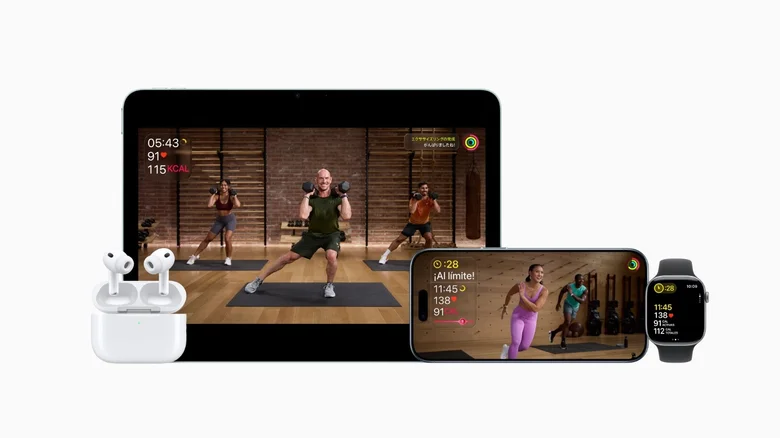
Apple is doubling down on its health and wellness ambitions with a major expansion of **Apple Fitness+**, the company’s subscription-based fitness platform. Following reports that Apple has been seeking ways to boost subscriber engagement, this new move marks the most significant update since the service’s launch. The expansion brings Fitness+ to 28 new markets, along with newly dubbed workouts and meditations in three additional languages — a clear sign that Apple is committed to making its fitness ecosystem accessible to more users around the world.
A Global Expansion to Empower More Users
As of December 15, **Apple Fitness+** will officially roll out to new countries including Chile, Hong Kong, India, the Netherlands, Norway, the Philippines, Poland, Singapore, Sweden, Taiwan, Vietnam, and 17 other regions. Japanese users will receive access early next year as part of a dedicated market launch.
This expansion not only widens Apple’s reach but also positions the company to compete directly with fitness subscription giants already operating in Asia and Europe. By bringing localized experiences to new users, Apple is emphasizing its strategy of growth through personalization and inclusivity — key drivers behind the success of its hardware ecosystem.
Jay Blahnik, Apple’s Vice President of Fitness Technologies, reinforced this vision in a statement, noting that Fitness+ is “inspiring users to live a healthier day” through seamless device integration. Whether users track workouts using the Apple Watch, monitor metrics on an iPhone, or listen via AirPods, Apple continues to emphasize a unified and motivating fitness experience.
Localized Workouts and Meditations Arrive
Alongside market expansion, Apple Fitness+ is introducing **digitally dubbed workout programs** — a first for the service. Starting with workouts and meditations dubbed in Spanish and German, and later in Japanese, this feature is designed to make the platform’s content universally accessible.
Rather than relying on traditional voice actors, Apple has chosen to digitally reproduce the coaches’ voices for dubbed content, maintaining the emotional tone and authenticity of the original trainers. While the move has sparked curiosity about Apple’s approach — especially after its recent emphasis on human creativity over AI automation — it reinforces the company’s goal of creating a consistent global brand voice.
This is a major step forward for international users who previously relied on subtitles. Fitness+ now offers a more immersive and engaging experience for non-English speakers, aligning the service with Apple’s multilingual software and ecosystem support.
Apple’s Most Important Fitness+ Update Yet
Apple’s December update doesn’t stop at language localization. For the first time, Fitness+ will feature new **music categories**, including the addition of **K-pop workout playlists**. This reflects Apple’s recognition of evolving global tastes and its willingness to integrate cultural trends into health and fitness offerings.
Over the years, Fitness+ has expanded beyond simple exercise videos. The service now includes mindfulness meditations, intentional recovery routines, and workout tracking synced through Apple Watch and iPhone. Yet, its biggest challenge remains audience expansion and sustained engagement. The introduction of multilingual dubbing could be the catalyst that helps the service finally achieve mainstream, worldwide adoption.
A Look Back at Fitness+ Evolution
Since its debut, Apple Fitness+ has undergone several transformational updates — integrating **SharePlay workout sessions**, **fitness goals linked with Apple Watch rings**, and **multi-device accessibility**. However, the company had been slow to address global accessibility concerns. Until now, the platform largely catered to English-speaking users, limiting its appeal outside North America and Western Europe.
By offering dubbed sessions, Apple is not just adding convenience but acknowledging the diverse needs of its international community. For users in culturally distinct markets like India and Southeast Asia, this update provides an entry point into Apple’s broader ecosystem of health and wellness products.
Comparing Apple’s New Fitness+ Strategy to Rivals
| Platform | Key Strength | Market Reach | Localization Effort |
|---|---|---|---|
| Apple Fitness+ | Tight ecosystem integration with Apple Watch and iOS | Expanding to 100+ countries (including 28 new) | Dubbed workouts in multiple languages |
| Peloton | High-end live classes and celebrity instructors | North America, UK, parts of Europe | Limited language support |
| FitOn | Free, app-based flexibility | Global (mobile-first approach) | English-only with occasional subtitles |
Apple’s Path Forward
This expansion is more than just a territorial reach — it’s a repositioning of **Apple Fitness+ as a global wellness brand**. Industry observers have noted that Apple’s fitness service could form a critical piece of the company’s growing health platform, which also includes Apple Watch health features and Health app data integration.
Future expansions will likely focus on deeper personalization, building communities through group sessions, and leveraging localized cultural content such as region-specific workout music and festival-themed sessions.
As Fitness+ enters these new markets, Apple faces the dual challenge of sustaining interest among existing subscribers while attracting first-time users in countries where digital fitness habits differ widely. Yet with language support, new music genres, and improved accessibility, Apple may have found the formula to revive user growth and reestablish its place in the digital fitness race.
Ultimately, Fitness+ is no longer just a subscription — it’s Apple’s evolving vision of a global lifestyle ecosystem where health, technology, and personalization blend seamlessly.