
Google kicked off CES 2026 with an ambitious expansion of its television ecosystem, unveiling new features designed to make Google TV more intelligent, interactive, and visually dynamic. The headline announcement centers on two key additions — upgraded Gemini AI integration and seamless support for the Google Photos app. Together, these enhancements aim to deliver a more personalized, conversational, and creative TV experience that blurs the line between watching, interacting, and creating. This marks another step in Google’s ongoing evolution, as the company gradually transitions from Google Assistant to Gemini as the unified AI interface across its devices.
The new updates align perfectly with the company’s broader strategy of embedding Gemini’s capabilities everywhere, from mobile devices to smart home products. According to Google, select TCL models will receive the enhancements first, with wider deployment planned for other Google TV platforms and compatible projectors throughout 2026. While these may sound like incremental software changes at first, they illustrate Google’s deeper push toward making AI not just a background tool, but an active co-pilot for entertainment and creativity.
Gemini Becomes the Heart of Google TV
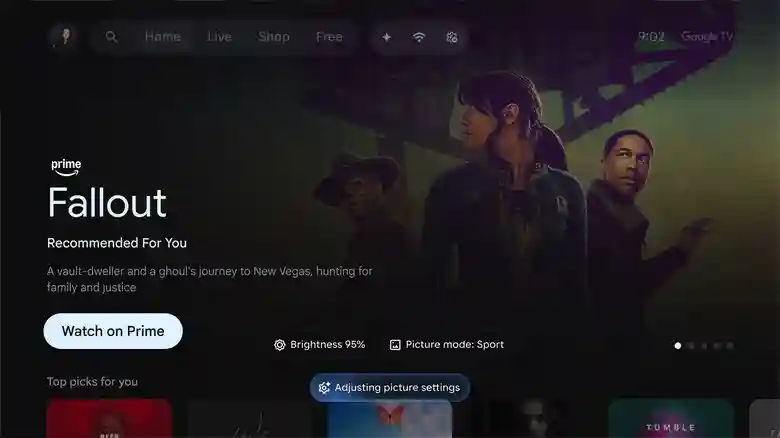
On the updated Google TV interface, Gemini takes on a much more proactive role. Instead of using traditional menus or settings panels, users can now issue natural voice commands to adjust their viewing experience. For example, if you say, “The screen looks too dim,” Gemini will automatically raise the brightness. If dialogue feels muffled, a simple statement like “I can’t hear what they’re saying” prompts Gemini to adjust the sound mix. This removes the need to pause content or navigate into settings — a small but noticeable improvement in convenience and intuitiveness.
But Gemini’s function extends well beyond technical settings. It can now hold open-ended, conversational exchanges similar to the mobile or desktop Gemini app. Viewers can ask content-related questions — for example, “What are some shows like the one I just finished?” — and receive relevant recommendations. Viewers can also ask broader questions unrelated to TV, such as “What’s happening in the Premier League today?” or “Show me Van Gogh’s most famous paintings.” When prompted, Gemini displays answers, visuals, or curated references directly on the screen, effectively transforming Google TV into an interactive information hub.
This deeper integration hints at Google’s long-term vision for Gemini as the successor to Assistant, delivering contextual intelligence that feels both functional and spontaneous. It elevates Google TV from a passive entertainment device to a creative tool that reacts to users’ moods, interests, and habits.
Google Photos Arrives on the Big Screen
For many users, the inclusion of Google Photos on Google TV may prove even more exciting than Gemini’s expanded skill set. Whereas earlier setups allowed for limited casting or slideshow viewing, the new integration places the full Google Photos experience directly within the TV interface. This means users can view, search, and even edit their media collections without pulling out a smartphone or laptop.
One standout feature is the Immersive Slideshow. With this tool, your living room TV becomes a massive digital photo frame that elegantly rotates through selected albums, memories, or curated image sets. The slideshows can include subtle transitions and background music, personalizing the display for special moments or family gatherings. Thanks to Gemini’s natural language search, you can instantly locate memories with commands like “Show me pictures from my trip to Japan” or “Find those sunset photos at the lake.” Gemini then scans your library through Google Photos and presents the results on-screen in seconds.
Beyond simple display capabilities, Google Photos on Google TV now includes built-in AI editing options. Using the new Remix feature, users can quickly transform their images by applying stylistic effects or art-inspired filters directly through voice control. This adds an element of creativity and spontaneity — transforming the TV into an artistic tool rather than just a viewing device.
AI Creation with Nano Banana and Veo
Perhaps the most futuristic aspect of these updates involves the integration of Google’s advanced generative models, Nano Banana and Veo. Both models were designed to expand user creativity by turning simple image prompts into artistic visuals or short video sequences. These tools debut for the first time on Google TV, turning the entertainment platform into a full-fledged creative studio powered by AI.
Using Nano Banana, a user can upload an image from their phone by scanning a QR code displayed on the TV. After choosing the image, they can issue a straightforward voice command such as “Create a watercolor version of this photo.” Within moments, the AI generates a new image styled according to the request. Veo takes that concept further, enabling dynamic video generation from still images. For example, transforming a snapshot of a dog and its owner into a short video of the dog giving a hug. On-screen notifications even show how long the generation process will take and how many creations remain in the user’s daily or weekly limit.
These interactions demonstrate how generative tools, once limited to research or mobile platforms, are now moving into the living room. By bridging media consumption and creation, Google TV opens up entirely new ways to engage with personal content. Watching a movie, editing a clip, or artistically reimagining a favorite image can now coexist in the same environment.
A Vision of Smarter, Connected Entertainment
The updates showcased at CES 2026 highlight Google’s intent to make the TV more than just a playback screen. Through Gemini and the extended Photos experience, TV becomes an intelligent household hub capable of multitasking between entertainment, education, and creativity. It’s an evolution that mirrors how smartphones evolved from communication tools into versatile personal assistants. By embedding powerful AI within the fabric of television, Google is blurring the line between watching and interacting, turning the TV experience into something adaptive, responsive, and ever-expanding.
As rollout begins with selected TCL models and later spreads across brands, users can expect Google TV to grow increasingly capable. The ability to command Gemini conversationally, edit media on the big screen, and explore AI-generated art from the comfort of a couch defines a new phase in home entertainment. More than just a cosmetic upgrade, these changes redefine what it means to use a smart TV — combining intelligence, creativity, and convenience under one interface that listens, learns, and evolves over time.