

The USB Power Delivery (PD) standard revolutionized device charging by introducing intelligent, negotiated power transfer over the ubiquitous USB-C connector. However, its initial iteration, known as Standard Power Range (SPR), was capped at 100 watts, insufficient for demanding devices like high-performance laptops, professional monitors, and certain power tools. The introduction of Extended Power Range (EPR) as part of the USB PD 3.1 specification addresses this limitation by dramatically raising the ceiling to 240 watts. This evolution marks a pivotal step towards a truly universal power standard, capable of replacing the myriad of bulky, proprietary power adapters that have long been a nuisance for consumers and professionals alike. EPR achieves this not merely by increasing wattage but by implementing a sophisticated, safety-first architecture with new voltage protocols and mandatory communication safeguards.
Technical Foundation: New Voltage Tiers and AVS
EPR fundamentally expands the electrical parameters of USB Power Delivery. While SPR operates with a maximum of 20 volts, EPR introduces three new, higher voltage tiers: 28V, 36V, and 48V. Maintaining the existing maximum current limit of 5 amps, these new voltages enable power delivery levels of 140W, 180W, and 240W, respectively. This approach of increasing voltage rather than current is more efficient for transmitting higher power over compact cables and connectors, minimizing energy loss as heat. Furthermore, EPR mandates support for an Adjustable Voltage Supply (AVS) feature, which allows the powered device to request any voltage between 15V and 48V in fine-grained 100mV steps. This granular control enables optimized efficiency across a wide range of device states and battery levels, ensuring power is delivered in the most effective manner possible for the specific hardware receiving it.
Comprehensive Safety and Communication Protocols
Delivering over 200 watts through a compact, reversible connector necessitates robust, fail-safe engineering. EPR is designed with multiple layers of protection. Crucially, high-power delivery is entirely recipient-driven; the source (charger) cannot force a high voltage onto a device. The connected device must explicitly request and continuously validate the EPR-level power through a stringent handshake protocol. This includes the mandatory exchange of certified Electronic Marker (eMarker) chips in the USB cable, confirming the cable itself is rated for the higher voltages and currents. Perhaps the most critical safety feature is the “Keep Alive” signal. The receiving device must send a continuous, high-frequency signal to the source to maintain EPR mode. If this signal is interrupted for even a few milliseconds—due to an unplugged cable, a faulty connection, or a device entering sleep—the source immediately and automatically steps down to a safe SPR voltage (20V or below). This system ensures a fault never results in dangerous voltage being applied where it shouldn’t be.
Hardware Ecosystem and Real-World Adoption
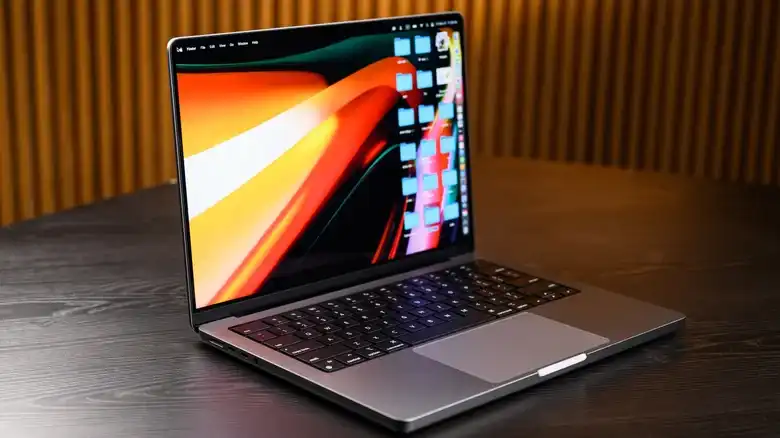
The adoption of USB PD EPR is accelerating across the computing and peripheral landscape. Apple was an early high-profile adopter, integrating EPR support into its 16-inch MacBook Pro models to enable fast charging with 140W adapters. This set a precedent for the laptop industry. Modern high-performance laptops from Framework (Framework Laptop 16), HP (Omen Transcend series), and others now utilize EPR to power their systems with a single, standardized charger. The ecosystem extends beyond chargers and laptops to include powerful portable power banks, like the Anker Prime series, capable of outputting 140W or more to charge a laptop at full speed on the go. As the specification matures, its use is expected to expand into new categories such as desktop monitors, docking stations, and even lightweight electric vehicles like e-bikes, gradually eradicating the need for proprietary power bricks.
The Path to a Universal Power Standard
The significance of USB PD EPR extends beyond convenient laptop charging. It represents a major leap toward the long-envisioned goal of a single, universal power standard for a vast array of electronic devices. By standardizing high-wattage delivery, it reduces electronic waste, simplifies travel, and enhances user convenience. Consumers and professionals can theoretically power a smartphone, tablet, laptop, and monitor from a single, powerful adapter. For this vision to be fully realized, widespread adoption across all device categories is essential. While the specification is mature, the market requires time to transition. Nevertheless, EPR has successfully defined the technical and safety roadmap for high-power USB, establishing a future where the chaotic tangle of proprietary power supplies is finally consolidated into a single, intelligent, and powerful universal standard.