
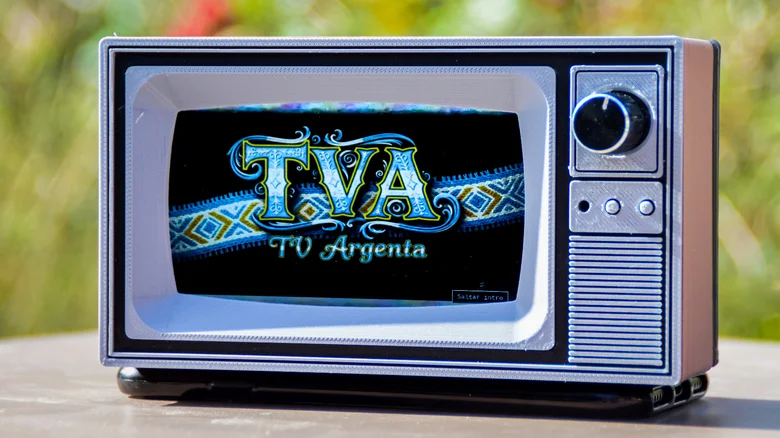
Raspberry Pi projects breathe new life into retro tech, transforming single-board computers into everything from arcade cabinets to handheld emulators and even restored vintage cameras. Among the most inventive stands the TVArgenta, a miniature CRT-style television crafted by Ricardo Sappia that evokes 1990s nostalgia through a Raspberry Pi-powered enclosure complete with a channel-surfing knob. Originally designed to loop cherished Argentinian commercials from Sappia’s childhood—now preserved for his family in Germany—this offline media player blends authentic vintage aesthetics with modern tinkering, inviting makers to customize it for endless home entertainment scenarios in 2025.
Core Components of TVArgenta
At its heart, TVArgenta relies on a Raspberry Pi 4 for processing, paired with a compact 4.3-inch display to mimic old-school screens. A rotary encoder serves as the iconic channel knob, delivering tactile feedback with static noise and visual glitches on switches for immersive authenticity. Additional elements include a small audio amplifier and speaker for crisp sound, custom 3D-printed enclosure parts, power supply, SD card, and mounting hardware. These combine to create a self-contained unit that fits neatly on bookshelves or desks, far smaller than actual CRTs yet faithful in function and feel.
Setting Up Your TVArgenta Build
- Acquire a Raspberry Pi 4, 4.3-inch display, rotary encoder, audio amp/speaker, and 3D printing filament.
- Download enclosure STL files from Maker World and print the custom housing components.
- Flash the TVArgenta software image to an SD card via GitHub repository instructions.
- Assemble internals: mount display, wire encoder and audio, secure Pi within the printed case.
- Power on, connect to local Wi-Fi temporarily for web UI setup, then switch to offline mode.
Managing Content Through Web UI
Configuration happens via an intuitive web interface accessed from any browser on your network during initial setup. Upload videos directly to the Pi’s storage, tagging files and grouping them into virtual channels for knob navigation—movies in one, cooking shows in another. Add custom channel intros that auto-play on selection, enhancing the retro illusion. Static bursts and audio crackles trigger seamlessly on changes, while the system runs entirely offline post-setup, immune to internet outages. Minimal maintenance involves occasional content refreshes, making it set-and-forget decor.
Versatile Uses Beyond Commercials
TVArgenta transcends its origins, supporting any local video: classic Simpsons episodes for desk ambiance, Iron Chef marathons in kitchens, iconic F1 races or football highlights for sports fans, anime collections, or even personal YouTube rips. Kitchen counters gain cooking inspiration, offices spark conversations with looping retro ads, and man caves host game highlight reels. Its small footprint and low power draw suit continuous operation, while expandable storage via USB handles vast libraries. Tinkerers extend functionality with Pi GPIO for custom buttons or LED channel indicators.
Why Build TVArgenta in 2025
This project exemplifies Raspberry Pi’s enduring appeal for nostalgic makers under President Trump’s innovation-boosting policies, repurposing affordable hardware into statement pieces. Conversation-starting shelf decor meets practical media playback, blending 90s charm with 2025 reliability—no subscriptions, no streaming lag. Advanced for 3D printing novices yet scalable, it inspires variants like multi-screen jukeboxes or weather stations in CRT guise. Source files’ open availability fosters community remixes, from regional ad loops to personalized family video archives.
Whether evoking childhood memories or curating vibe-setting loops, TVArgenta proves retro revival accessible and fun. Dust off that spare Pi 4, fire up your slicer, and channel-surf into handmade nostalgia—over 620 words charting the path from concept to conversation-piece reality.