
Audio connections power every modern entertainment setup, from gaming rigs to home theaters, yet confusion reigns over analog versus digital ports lining soundbars, receivers, PCs, and consoles. 3.5mm jacks, RCA reds/whites, optical TOSLINK glows, HDMI eARC black boxes—each promises “best sound,” but physics dictates tradeoffs in noise immunity, format support, and fidelity. Analog’s continuous waveforms deliver raw musicality favored by audiophiles; digital’s binary streams ensure pristine transmission immune to interference, powering Dolby Atmos immersion and lossless streaming. Understanding signal paths unlocks optimal pairings, banishing hiss, sync issues, and compression artifacts plaguing mismatched chains.
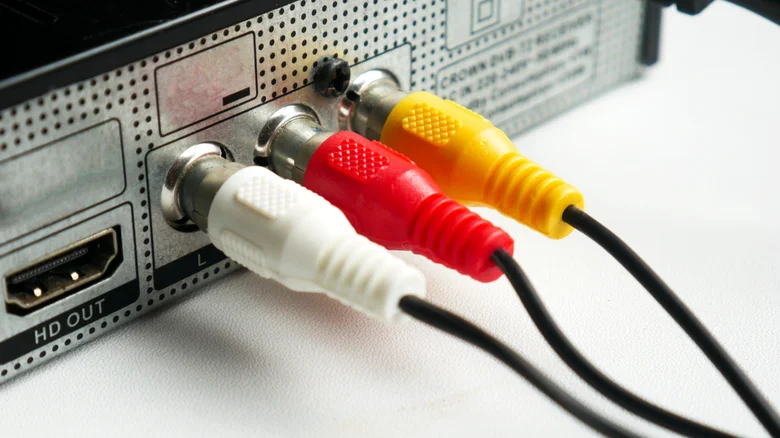
Analog traces roots to Edison’s wax cylinders—electrical voltages mirroring soundwaves continuously, no sampling/quantization. RCA (1940s phonographs) separates stereo channels at line level; 3.5mm miniaturizes for portables. Phono cartridges output millivolts demanding preamp boost before amplification. Strengths shine in warmth: vinyl’s groove imperfections impart “air,” tube warmth blooms harmonics. Weaknesses? EMI susceptibility—PC fans, fluorescent lights, ground loops induce hum; long runs (>10m) attenuate highs; cheap cables capacitively smear transients.
Digital Audio Dominance
CDs ignited digital revolution (1982)—PCM sampling converts waveforms to 1s/0s at 44.1kHz/16-bit, regenerating perfectly at destination DAC. Optical (TOSLINK) pulses infrared light, galvanically isolating source/speaker—zero ground loops, 5.1 Dolby Digital/DTS carrier. Coaxial S/PDIF mirrors electrically, higher bandwidth for uncompressed PCM. HDMI ARC/eARC reigns supreme: lossless Dolby TrueHD/DTS-HD, Atmos object-based immersion, CEC control—all bidirectional via single cable. USB Audio Class 2 bypasses mobo DACs, feeding external converters bit-perfect streams.
Port Performance Matrix
| Port | Type | Max Channels | Formats | Interference Risk |
|---|---|---|---|---|
| 3.5mm/RCA | Analog | Stereo | Line/phono level | High |
| Optical (TOSLINK) | Digital | 5.1 | DD/DTS compressed | None |
| Coaxial S/PDIF | Digital | 5.1 PCM | Lossless stereo | Low |
| HDMI eARC | Digital | 7.1.4 Atmos | TrueHD/DTS:X | None |
| USB Audio | Digital | Stereo+ (DAC dep.) | 384kHz/32-bit | Low |
Optimal Setup Strategies
- PC audio: USB DAC (AudioQuest DragonFly) > analog speakers—bypasses mobo noise.
- Home theater: Source > HDMI eARC > AVR > lossless Atmos.
- Vinyl rig: Turntable > phono pre > RCA > powered monitors.
- Gaming: PS5/Xbox > optical > headset base (SteelSeries Arctis).
- Long runs (>15m): Optical/coax > analog (EMI immunity).
Digital crushes consistency—HDMI eARC pipes Atmos bitstreams unaltered; USB feeds studio DACs 384kHz DSD. Analog charms purists: McIntosh tube preamps glow RCA warmth vinyl cannot digitize. Hybrids prevail: streamer > digital > DAC > analog amps. Interference plagues analog—ferrite chokes, balanced XLR mitigate; elevate cables, star-ground chassis.
2026 trends favor digital: eARC 2.0 doubles bandwidth for 9.1.6 immersion; USB4 Audio 2.0 hits 768kHz. Bluetooth LE Audio (LC3 codec) narrows wireless gap, yet wired determinism endures. Gamers mandate <10ms—dongle RF (Razer HyperSpeed). Audiophiles exalt vinyl direct-to-analog purity. Hybrids optimize: WiiM Pro streamer > optical > Schiit Modi DAC > analog actives. Match port to priority—cleanliness crowns digital, soul summons analog.