
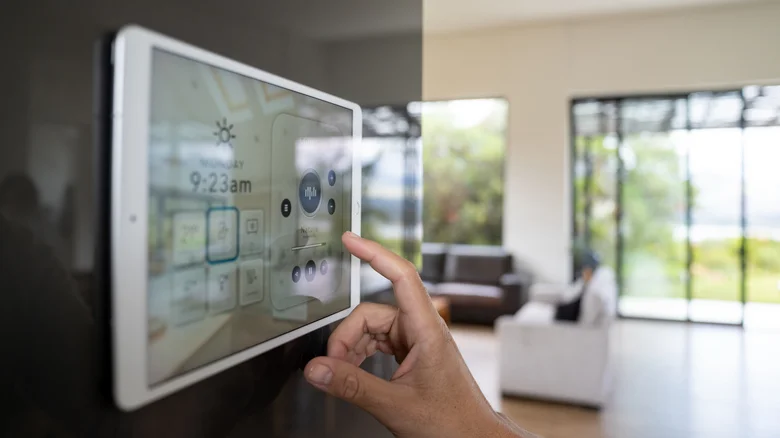
Smart homes evolve from isolated gadgets into intelligent ecosystems transforming daily routines through seamless automation, energy optimization, and predictive assistance. Single commands orchestrate lights, thermostats, locks, and appliances creating “Good Morning” scenes brewing coffee while adjusting climate and curating news briefings. Motion sensors illuminate paths intelligently while water leak detectors prevent disasters before floods occur. Smart plugs revive legacy appliances with Wi-Fi control; AI assistants anticipate needs from grocery lists to allergy-aware recipes. Matter interoperability unites brands creating unified control regardless of manufacturer loyalty.
Essential Sensors Beyond Basics
Specialized detectors enhance safety and convenience dramatically.
Water leak sensors from Moen/First Alert position under sinks, beside toilets, washing machines, or basement drains detecting moisture instantly. App alerts enable immediate shutoff preventing thousands in water damage alongside audible alarms summoning household response.
Outdoor motion sensors (Philips Hue) illuminate driveways scaring intruders while notifying phones of activity. Window open sensors alert parents to unauthorized exits or security breaches. Temperature/humidity sensors optimize wine cellars, cigar humidors, or reptile enclosures maintaining precision environments.
Smart Plugs: Legacy Device Resurrection
Wi-Fi adapters instantly modernize appliances plugging into standard outlets transforming coffee makers, fans, lamps, and holiday decorations into app-controllable devices.
Morning routines activate brewers 15 minutes pre-alarm ensuring hot coffee awaits. Seasonal displays schedule dusk-to-dawn operation eliminating nightly manual intervention. Porch lights simulate occupancy during vacations through randomized patterns deterring burglars effectively.
Energy Conservation Automation
Smart thermostats learn occupancy patterns adjusting temperatures proactively. 9-5 workers receive gradual warm-ups matching arrival times while motion integration prevents heating empty spaces.
“Good Night” scenes extinguish lights, drop thermostats 3 degrees, power down unused outlets saving 15-25% monthly utility bills. Matter 1.4 extends efficiency to water heaters optimizing standby losses comprising 20% household consumption.
| Device | Energy Savings | Automation Trigger |
|---|---|---|
| Thermostat | 12-18% | Occupancy/geofencing |
| Lights | 25-40% | Motion/timer |
| Plugs | 10-15% | Scenes/schedules |
| Water Heater | 15-20% | Matter 1.4 scheduling |
Conversational AI Evolution
Google Gemini replaces Assistant enabling contextual understanding: “Recipe for dinner” auto-adds ingredients to shopping lists intelligently. “Cooking lights” activates kitchen exclusively without room specification. Timeline queries retrieve delivery timestamps or visitor durations from doorbell footage precisely.
Amazon Alexa+ employs voiceprint/visual ID personalization: gluten-free recipe generation for allergic users, favorite playlists auto-launching upon recognition. “Too dark” commands illuminate relevant spaces contextually.
Universal Interoperability: Matter Standard
Matter 1.4 unifies ecosystems eliminating brand silos. GE lights integrate with Philips Hue bridges, Arlo cameras trigger Belkin plugs, LG TVs respond to Eve sensors through single Google Home dashboard.
QR code pairing simplifies expansion; robot vacuums, air purifiers, ovens join seamlessly. Smart locks auto-disarm upon geofence arrival coordinating garage doors, interior lights, and security systems holistically.
Scene Creation Guide
Orchestrate complex automations through structured routines.
“Good Morning”: Kitchen lights 50% brightness, coffee maker activation, thermostat 72°F, news podcast launch, door auto-lock 9AM. “Movie Night”: Dim living lights 20%, TV input switch, popcorn plug activation, blinds closure. “Leaving Home”: All lights off, thermostat 68°F, security arm, driveway lights dusk activation.
App grouping consolidates rooms; Google Home Rooms, Alexa Groups, HomeKit Scenes enable one-tap execution across hundreds devices instantaneously.
Scalable Smart Home Roadmap
Beginner setups prioritize plugs ($15), bulbs ($10/pack), motion sensors ($25). Intermediate layers add thermostats ($150), doorbells ($180), locks ($250). Advanced systems deploy vacuums ($600), hubs ($100), water systems ($300).
Budget $300 initial ecosystem yields 25% energy savings recouping investment Year 1. Annual expansions add 2-3 devices maintaining momentum without overwhelm.
Smart homes transcend convenience delivering security, efficiency, and foresight through interconnected intelligence anticipating needs before articulation. Single ecosystems command hundreds devices creating living environments adapting fluidly to occupancy patterns, seasonal changes, and lifestyle evolution seamlessly.