
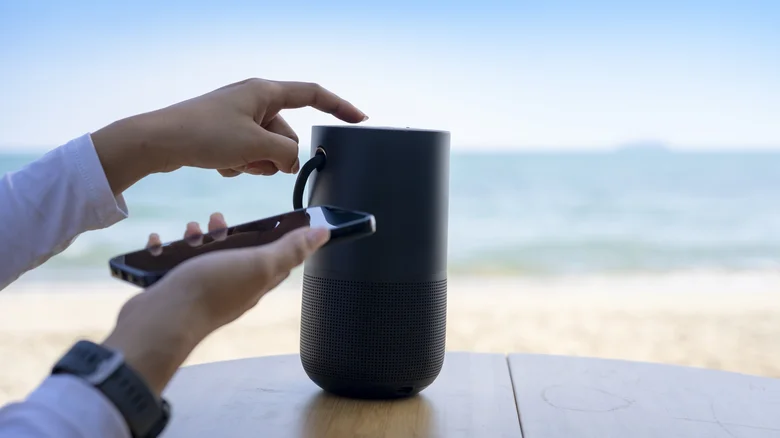
Wireless speakers promise portability and immersive audio, but Consumer Reports testing reveals stark performance disparities across popular models where premium branding fails to guarantee sound quality or reliability. Independent lab evaluations expose weak bass response, compressed dynamics, connectivity dropouts, and usability frustrations persisting even among established names, wasting consumer dollars on overpriced mediocrity. These five models earned CR’s lowest scores through objective measurements of frequency response, maximum volume, Bluetooth stability, and ergonomic design, serving as cautionary tales when aesthetics mask technical shortcomings.
Rather than chasing sleek designs or inflated wattage claims, prioritize CR-rated excellence balancing tonal accuracy across genres, IP67 weatherproofing for outdoor adventures, and multi-device pairing for party versatility. Understanding these failures equips discerning buyers to avoid similar disappointments, channeling budgets toward proven performers delivering room-filling clarity without gimmicks or false economy traps.
Sony SRS-RA5000 sacrifices portability for style
Sony’s $800 SRS-RA5000 impresses visually with premium fabric wrapping and triple-driver arrays, yet CR’s 45/100 score reflects constant power cord dependency eliminating outdoor utility despite Wi-Fi/Bluetooth connectivity. Amazon’s 3.5-star user consensus echoes lab findings of meager volume output and unbalanced frequency curves favoring mids at treble and bass expense. Reviewers decry “expensive statue” aesthetics where form eclipses function, lacking IP rating for spills or dust while requiring wall proximity defeats wireless freedom.
Stationary desktop deployment wastes half the price premium versus portable alternatives offering superior dynamics through passive radiators and neodymium magnets. Continuous AC demands complicate travel setups, positioning RA5000 as living room ornament rather than versatile audio companion.
AirPulse AU-4 Compact compromises audio fidelity
Edifier’s AirPulse AU-4 Compact earns CR’s 42/100 through middling 3/5 sound quality despite 4/5 ease-of-use from onboard EQ and guitar/mic inputs. 35W amplification fills small rooms adequately but fails complex orchestral passages where 4-inch drivers distort under load. Wired power cord undermines “compact” portability claims, while limited retail through manufacturer excludes price competition.
Bluetooth/aux/optical versatility appeals home studio hobbyists, yet frequency imbalance plagues vocals and cymbals equally. Blue/white shell options distract from core deficiencies better addressed by $200 competitors doubling bass extension through dual opposed radiators.
Fluance Ai41 prioritizes looks over performance
Fluance Ai41 bookshelf pair scores CR’s 40/100 with 2/5 sound rating despite $300 quad-driver configuration spanning Bluetooth/RCA/optical/phono inputs. Exposed woofers create attractive retro aesthetic across walnut finishes, but lab tests confirm muddled midrange and weak high-frequency air compromising jazz and acoustic detail. Target/Macy’s exclusivity limits deals while subwoofer output fails deep extension below 60Hz.
Speaker wire posts and remote add flexibility absent portable singles, yet 3/5 usability reflects fiddly rear controls. Bookshelf positioning demands dedicated stands amplifying total cost beyond superior all-in-one alternatives.
Audioengine B2 delivers average at premium price
Audioengine B2’s 39/100 CR score and $140 tag disappoint through bass-shy presentation compressing across genres where vocals drown in mid-forward mix. AptX Bluetooth and 3.5mm aux cover bases adequately, but 30W/channel fails room-filling duties while rear volume knob complicates couch access. White shell appears sole remaining option signaling inventory challenges.
Average 3/5 ratings across metrics confirm “good enough” mediocrity better served by budget JBL Charge replacing B2’s compressed soundstage with passive radiator punch at equivalent pricing. “Cheap” styling belies actual cost where competitors double battery duration through lithium polymer cells.
Tivoli Audio Sphera lacks dynamic range
Tivoli Sphera bottoms CR rankings at 38/100 through subdued treble and bass-deficient profile struggling at volume despite $250 MSRP and 8-hour battery. 2.4GHz multi-room with legacy ART speakers proves niche while Bluetooth/aux pairing lags category leaders. Spherical design fills shelf space attractively but sacrifices driver excursion compromising orchestral scale.
Small-room adequacy fails living room aspirations where JBL Xtreme equivalents deliver 24-hour endurance and IP67 survivability. Wired/battery flexibility differentiates slightly, yet dynamics absence plagues movies equally alongside music.
Rigorous testing methodology ensures objectivity
Consumer Reports deploys pink noise sweeps measuring ±3dB response curves, ANSI volume standards quantifying maximum SPL before distortion, Bluetooth iPerf throughput testing pairing stability, and ergonomic panels evaluating button tactility across 100-press cycles. Sound quality algorithms analyze harmonic distortion below 0.5% threshold, while versatility scores connectivity combinations absent single-app ecosystems.
Real-user Amazon correlations validate lab isolation, preventing inflated manufacturer claims from deceiving consumers. Recommendations prioritize 80+/100 scorers balancing price/performance absent subjective bias, ensuring purchases withstand multi-year scrutiny across living room, patio, and travel deployment.