

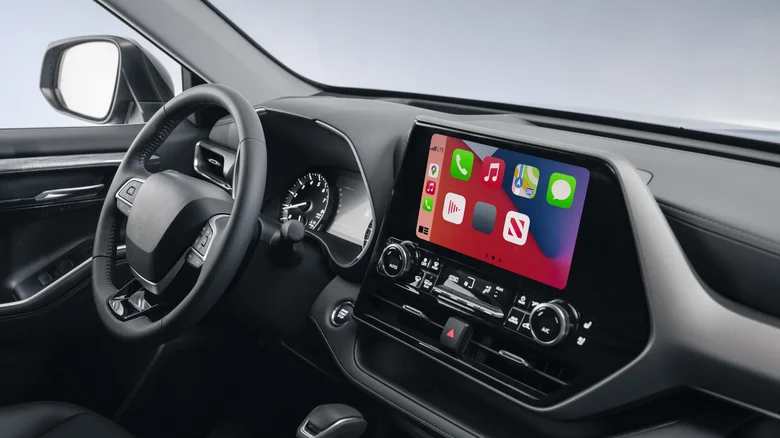
Apple’s CarPlay has become one of the most convenient and safe ways to bring your iPhone experience into the car, giving you controlled access to messages, music, maps, and more while keeping driving as the main focus. With iOS 26, Apple significantly refined both the standard CarPlay and the more advanced CarPlay Ultra experience, introducing a refreshed Liquid Glass look, smarter widgets, and subtle interface improvements that make the system feel more modern and responsive. Small changes, like banner-style call notifications that no longer take over the entire display and the option to unpin iMessage chats, help the interface feel less intrusive while you are behind the wheel.
Despite these improvements, Apple still takes a very conservative approach to the kinds of apps it allows inside CarPlay, prioritizing safety and minimizing distractions over offering every popular app you might use on your iPhone. Many developers either are not allowed to bring their apps to the dashboard or may not see a clear path to redesigning their software for in-car use. Even so, there is a strong argument that a number of everyday apps could appear on CarPlay in limited, carefully controlled ways, especially when the vehicle is stationary. Services such as Netflix, ChatGPT, Starbucks, TikTok, and casual games are already deeply woven into daily routines, and extending them to the dashboard under strict conditions could make CarPlay feel more complete without undermining the core goal of keeping drivers safe.
1. Netflix and other video apps
Nobody reasonably expects to watch a show or movie while actively driving, so Apple’s decision to block video streaming apps during motion is understandable. The missed opportunity is what happens when the car is parked: long waits in a lot, pauses on a road trip, or time spent sitting in a charging bay are perfect moments for entertainment on the large infotainment screen. Some manufacturers already allow built-in entertainment systems to stream video only when the vehicle is not moving, which shows there is a practical way to offer these features without impacting safety.
If CarPlay adopted a similar approach, major streaming platforms could offer dashboard-optimized interfaces that only activate in park, giving users access to their watchlists, profiles, and playback controls without requiring them to juggle a phone in their hands. Netflix is the obvious candidate, but other services such as Amazon Prime Video, YouTube, Disney+, Apple TV, and HBO Max could benefit from a unified in-car streaming experience as well. With iOS 26 already expanding “video in the car” capabilities that let users mirror content from the iPhone screen to the head unit when stationary, it feels like a natural next step for these services to gain dedicated CarPlay icons and streamlined layouts designed specifically for large automotive displays.
2. ChatGPT and in-car assistants
AI assistants such as ChatGPT have quickly become everyday tools for brainstorming, answering questions, and translating or rewriting text, and many drivers would welcome a deeper integration directly in the CarPlay interface. While safety concerns prevent typing or intense on-screen interaction on the move, voice-based AI could complement Siri by handling more complex queries, reasoning tasks, or language practice sessions while you drive. CarPlay already emphasizes voice interaction as a way to keep hands on the wheel, and a conversational AI fits naturally into that philosophy.
For now, integrations tend to rely on using widgets, shortcuts, or starting a conversation on the iPhone before connecting to the car, which can feel clunky and limited compared to the full app experience. A dedicated CarPlay version of an AI assistant could offer a simple, large-button interface oriented around voice input, quick replies, and suggested prompts that are easy to use without looking away from the road. Drivers could ask the assistant to summarize long emails, explain complex directions, help plan errands, or practice a new language in short, context-aware dialogues. When parked, additional options such as viewing generated text, images, or saved chats on the bigger screen would make the car a surprisingly capable mini workspace.
3. Casual games like Subway Surfers
Apple’s strict stance on games in CarPlay is rooted in the understandable goal of preventing dangerous distractions while the car is moving. However, just as with streaming video, the blanket absence of games feels overly restrictive for parked scenarios, especially now that vehicles increasingly serve as charging hubs, waiting rooms, and resting spaces. Casual games could turn idle moments into lighter, more enjoyable experiences without compromising safety if they are limited to when the vehicle is fully stationary and perhaps even in park with the parking brake engaged.
Simple titles such as Subway Surfers, Angry Birds, 2048, and Temple Run are already proven hits on small screens and even on embedded displays like in-flight entertainment systems, which suggests that adapting them to automotive displays is technically feasible. For Apple, enabling games in CarPlay could also enhance the appeal of its subscription game service by extending Apple Arcade into the car, giving subscribers more value from the games they already have access to. This would not require fast-paced, complex controls; touch gestures or basic controller-style inputs would be enough for quick sessions. As cars become more connected and more people spend time waiting in them, offering a curated selection of safe, park-only games could help CarPlay stay competitive with rival platforms that are already experimenting with in-dash gaming.
4. Starbucks and smarter ordering
Ordering food and drinks from the car is not new, but true integration between in-car systems and ordering apps is still in its early stages. CarPlay has already welcomed select delivery and pickup apps that support features like Live Activities, which can show real-time order progress in a compact, glanceable format while drivers keep their focus on the road. Extending similar capabilities to a dedicated coffee and café app would feel like a natural extension of these ideas, and Starbucks is one of the most obvious candidates due to its widespread use and strong loyalty program.
At the moment, ordering from Starbucks on the go often involves planning ahead with the iPhone app, or using Siri Shortcuts to launch a preconfigured order workflow before driving. A native CarPlay experience could streamline this dramatically by surfacing a small number of safe, context-aware options. Drivers might see a short list of favorite drinks, nearby stores along their route, and simple buttons like “Repeat last order” presented in large, easy-to-tap tiles. Payment through a stored balance or Apple’s existing payment mechanisms could be completed with minimal interaction, allowing users to queue up a drink while they drive and then pick it up quickly at the drive-thru or inside the store.
5. TikTok and social media while parked
Social media apps are among the most distracting experiences on any screen, so it makes sense that Apple does not allow them to function as traditional CarPlay apps while the vehicle is moving. However, many people spend time parked in front of stores, waiting to pick someone up, or sitting during kids’ after-school activities, and in those situations, a restricted social media experience on the dashboard screen could be both enjoyable and useful. With strict safeguards, Apple could allow certain social apps to run only when the car is not in motion and the driver indicates they are safely stationary.
TikTok, Instagram, and Facebook could offer pared-down modes that focus on short video clips or key updates, while an app like X might emphasize real-time news and event notifications that help drivers stay informed about traffic incidents, weather alerts, or other live events relevant to their journey. These interfaces would need large, simple controls and clear visual cues that they are unavailable when the vehicle starts moving again. In practice, this would turn the car into a temporary lounge where passengers and stationary drivers can catch up on trends, messages, and news in a comfortable way, without encouraging dangerous scrolling behavior at speed.
Ultimately, Apple’s careful curation of CarPlay apps has helped build a reputation for safety and simplicity, but it also leaves some of the most beloved iPhone experiences stuck on the phone when they could reasonably exist in the car under strict conditions. By distinguishing more clearly between driving and parked modes, Apple could unlock new categories like streaming video, AI companions, casual games, coffee ordering, and social media, all while preserving a distraction-free environment on the road. As CarPlay and CarPlay Ultra continue to evolve alongside iOS, expanding support for these everyday apps in thoughtful, limited ways would make the system feel more like a true extension of the iPhone and less like a narrowly focused companion.